Making time to talk Transferring values
Since my children
were small, I always insisted that we eat our evening meal together as a
family. Whatever they are doing in the evening we sit down at the table
together. Now that they are older and spending more time with their
friends, I still try to ensure that we eat together on weeknights. This
is our opportunity to talk, and it is so normal that they always do.
Now that we are heading
for adolescence, our conversations move backward and forward from
football and ballet to schoolwork, friends, music, smoking, Grandad’s
colorful youth, and the pros and cons of becoming a vegetarian. I can
talk about difficult issues without having to announce a lecture and
immediately lose their attention. It means that our parental and family
values are filtering down to our children in an organic way, which just
might ensure that they hear and remember them when having to make
difficult choices.
Arguments with your preteen
Your daughter has
you cornered. She wants to dye her hair black for her last day at
elementary school and you have said, “No! Absolutely not.”
She starts to plead with you, saying that everyone else is doing
something: So and so is having braids and beads put in, another is
having highlights. “Please,” she says, “It’s the last day I’ll ever be
at that school.” You start to doubt your decision; you don’t want your
child to have dyed black hair all over the summer vacation, but you
can’t come up with a reason that she will accept. You stand firm, she
cries with frustration, and storms from the room. You are left upset and
bewildered, wondering if there was a better way to deal with her!
Part of the challenge of
dealing with this age group is the unexpectedness of it all. It seems it
was only a few weeks ago that you were struggling to get her to brush
her hair at all. When faced with these dilemmas, try and give yourself
some time to think your position through. Perhaps ask for some details
about what she wants to do and what her friends are doing and say that
you’ll get back to her with your decision. Perhaps a chat with another
one of the parents might help you to understand what has been agreed.
You can then make up your mind about whether this is a battle worth
fighting or just a little harmless fun that will bring you together over
the sink with some rubber gloves and a bottle of hair dye.

NOTE
Being cool and hanging out with others who are widely considered to be cool can be a masterful disguise for mixed emotions
Parenting tweens The drive to be cool
School dances, girl and
boy bands, pierced ears and fake tattoos, makeup, short skirts,
high-heel shoes, boys, social networking… and she’s only 11! The
in-between years, when she’s not quite an adolescent but not really a
child, can be a wake-up call for the teen years to come. If you can get
it right at this stage, you may have a head start for later.
Particularly in girls,
puberty may start to bring about physical changes that make your
daughter look older than her years and older than she feels. For this
age group, developing maturity has an elasticity that can be confusing
and stressful. Being “cool” and hanging out with others who are widely
considered to be “cool” can be a masterful disguise for this internal
tug of war.
A new age
Looking like the pop
stars and celebrities that she admires, mixing with peers who share the
same interests, and doing things that older kids do, all serve to mark
the end of childhood and the dawning of adolescence for your child. This
means decisions about the suitability of the clothes she chooses and
the way she wants to look. It also means choices of friends with whom
she wants to mix. These can sometimes be unsuitable or older girls and
boys, especially if she has had an early puberty. Finally, her behavior
may start to change, with signs of challenges and difficulties such as
lying about her whereabouts or being caught shoplifting. You may see
these as the influence of the peer group, but they may be more a sign of
your daughter’s need to fit in. Try asking her what it is that she
likes about her new friends—you may discover that they give her
something, composure or quirkiness, that she feels she is lacking.
Together, you may consider how she can develop these traits for herself
without being totally led by others.
Different identities
The rapid growth
in her cognitive and emotional development has moved her from the
spontaneous busy-ness of childhood to the beginnings of the more
reflective self-absorption of adolescence. She will be trying out
different identities, and experimenting with looks, companions, and
behaviors. Her templates for all these different possible selves will be
strongly influenced by what she sees in magazines, on television, and
on the internet. She will want to look like her friends. The shops are
filled with “tween fashion”—downsized fashion and glamour in colors and
shapes meant for older, shapelier, girls. And into this swirl of
glittering developmental confusion, there emerges for the first time a
sneaking doubt in her mind: That you, her parent, may not know best and,
worst of all, may not be cool at all.
What’s acceptable?
While your son or
daughter may be relishing the prospect of growing independence, new
intimacies, lights, music, and action… you as her parent, may be feeling
that it is all too much too soon. How do you steer a steady course
through these first tensions of growing up while keeping in touch with
your own judgment and values? The bottom line for the tween parent must
be to remember that she is still a child underneath that first bra and
lip gloss. The shift in your parenting doesn’t need to be seismic, but
it should subtly recognize changes from within and without. Behind the
challenges to your authority and judgment are many doubts and
insecurities that need careful handling, not a sudden imposition of
military rule or a complete relaxation of family routine in the quest to
become a cool parent.
Being popular
Popularity and
physical attractiveness are likely to be two issues most bothering your
child. You can help her to think about what it means to be popular by
putting it in perspective. Think with her about other young people and
what makes them popular, consider whether these are admirable traits or
not. For example, is it material possessions or having the latest
gossip, or is it being funny or a trustworthy friend? Particularly in
boys, there is a relationship between popularity and aggression, because
aggressive boys are perceived by their peers as tough and cool. Allow
your child to decide whether this is the sort of popularity that she is
after. Popularity can be more valuable among a small group of good
friends, rather than a large group of superficial acquaintances.
Socially able children are more likely to come from families where there
are clear rules about appropriate and inappropriate behavior. So don’t
stop teaching your child right from wrong now that she is starting to
question you. Redouble your efforts, explain your reasons, and share a
little of your own experience at a similar age. By imposing some limits
on her appearance and behavior, you will help her to feel secure and
more confident about her choices.
Fashion victim?
When it comes to
choices about what to wear and how to look, take account of the enormous
pressure on girls and boys to dress in a certain way from the media and
from their peer group. Preteens are targeted just as much as their
older sisters and brothers. However, your daughter will still look to
you for advice and approval (and financing) of the clothes she wears.
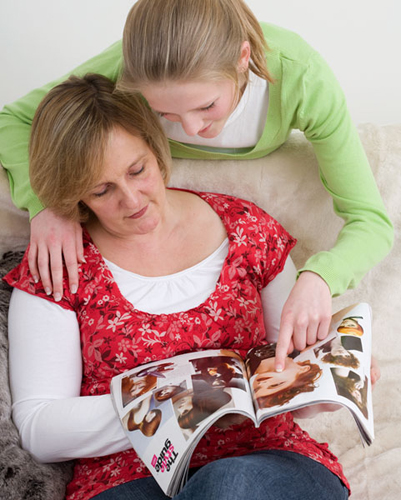
Look through magazines together and talk about what suits her, think
about stylish (age-appropriate) role models, and help her to discover
her own style. It might be a good idea to set a few rules about what you
consider acceptable, such as: When she can have her ears pierced, how
much makeup is OK, whether it’s OK for her midriff to show, etc. Give
some thought to what kind of a role model you are yourself. It is worth
updating your knowledge and views about music, pop culture, and fashion.
You could try exploring fashion and style together. By being better
informed about the world your tween inhabits, you are more likely to
earn her respect, to ensure that she listens to what you have to say
and, ultimately, to keep her safe.
Appropriate?
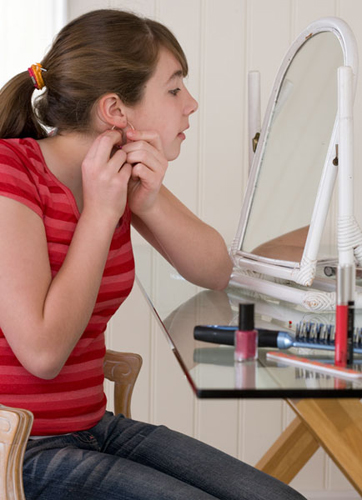
Think about what age you will allow your child to get her ears pierced or wear makeup and set rules to help her feel safe.
Looking cool
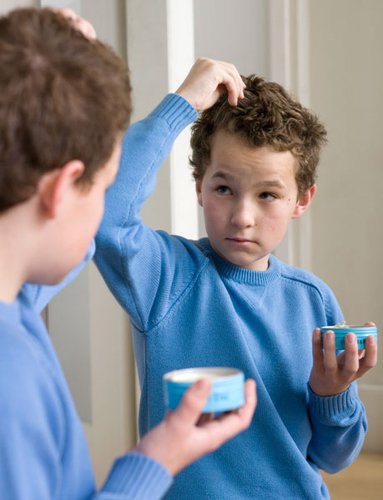
The drive to be cool is very strong at this age, with his peers and the media influencing fashion and hair styles.
Staying up to date
Try reading magazines together with your tween to understand her world. In this way you can show your interest.