Palazzo Altemps Collection
-
Garden of Delights Loggia
The loggia frescoes (c.1595) are a catalogue of the exotic fruits, plants and animals then being imported from the New World.
-
Athena Parthenos
The
1st-century BC Greek sculptor Antioco carved this statue to match the
most famed sculpture in antiquity, the long-lost Athena in Athens’
Parthenon.
-
“Grande Ludovisi” Sarcophagus
This
mid-3rd century AD sarcophagus, deeply carved and remarkably
well-preserved, shows the Romans victorious over the barbarian Ostrogoth
hordes.
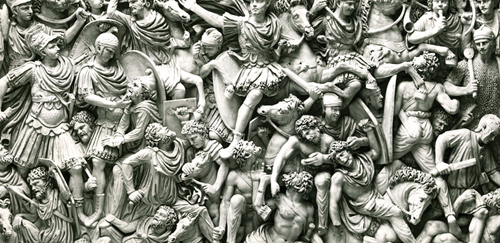
Grande Ludovisi sarcophagus
-
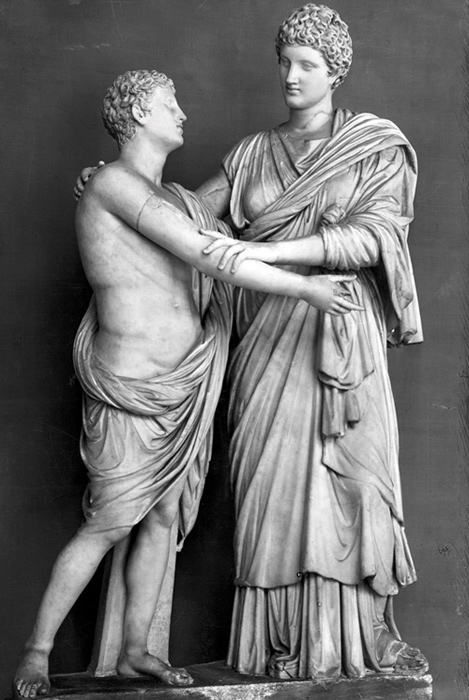
Orestes and Electra
This
1st-century AD statue was carved by Menelaus, an imitator of the great
Greek artist Praxiteles. The scraps of 15th-century fresco nearby depict
some wedding gifts from the marriage of Girolamo Riario and Caterina
Sforza.
-
Ludovisi Throne
This
set of 5th-century BC reliefs depicting the birth of Aphrodite came to
Rome from a Calabrian Greek colony and were discovered in the 19th
century.
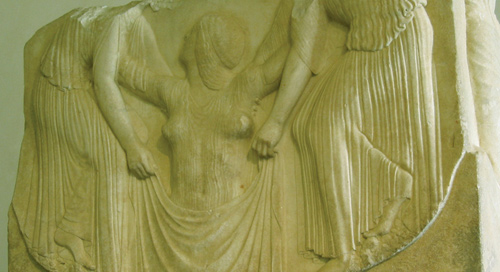
Relief, Ludovisi throne
-
Dionysus with Satyr
Imperial Rome was in love with Greek sculpture, producing copies such as this grouping of Dionysus, a satyr and a panther.
-
Apollo Playing the Lute
There are two 1st-century AD Apollos in the museum, both restored in the 17th century.
-
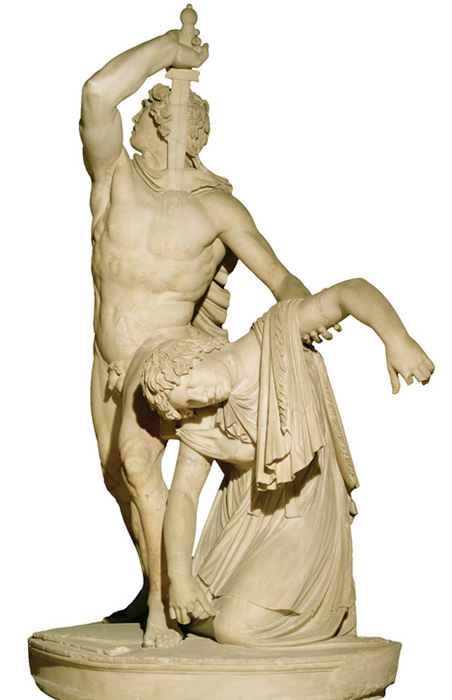
Suicidal Gaul
This suicidal figure supporting his dead wife’s arm was part of a trio, including the Capitoline’s Dying Gaul commissioned by Julius Caesar to celebrate a Gaulish victory.
-
Egyptian Statuary
The
Egyptian collections are divided into three sections related to that
culture’s influence on Rome: political theological, popular worship and
places of worship. The showpiece is the impressive granite Bull Api, or Brancaccio Bull (2nd century BC).
-
Colossal Head of Ludovisi Hera
German writer Goethe called this his “first love in Rome”. It is believed to be a portrait of Claudius’s mother, Antonia.
Ancient Roman Art
Ancient Rome’s art
was as conservative as its culture. Sculpture, the most durable art
form, was also the least original. From the middle Republican period
through to the Imperial age, Romans shunned original pieces for copies
of famous Greek works. The Caesars imported shiploads of Golden Age
statuary from Greece and its old colonies in southern Italy; Roman
workshops churned out headless, toga-wearing figures in a variety of
stock poses to which any bust could be affixed. It was at bust
portraiture that Romans truly excelled, especially up to the early
Imperial age when naturalism was still in vogue. Roman painting is
divided into styles based on Pompeii examples. The First Style imitated
marble panels; the Second Style imitated architecture, often set within
the small painted scenes that became a hallmark of the Third Style. The
Fourth Style was trompe-l’oeil
decoration. Mosaic, initially developed as a floor-strengthening
technique, could be simple black-on-white or intricate wall-mounted
scenes using tiny marble chips to create shading and contour. Opus sectile (inlaid marble) was a style that was imported from the East.
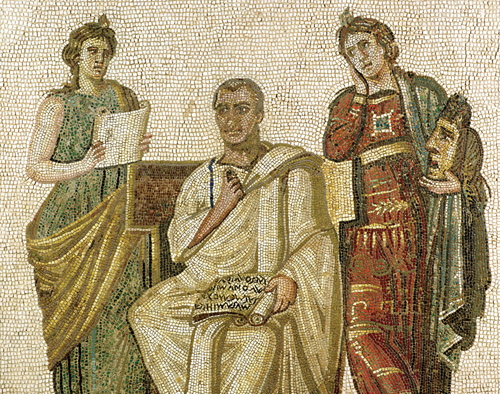
Mosaic of Virgil and the Muses
Top 10 Ancient Art Collections
-
-
-
-
-
-
-
-
Column of Marcus Aurelius
-
-