Palatine Hill Features

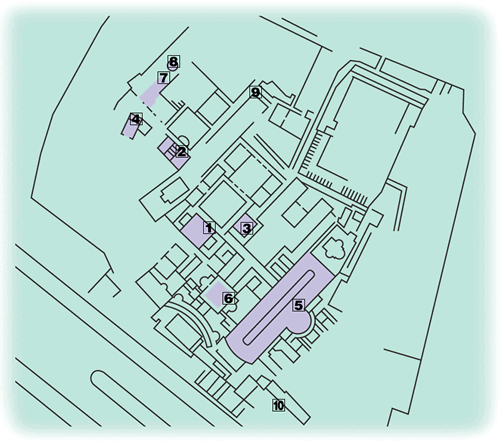
Plan of Palatine Hill
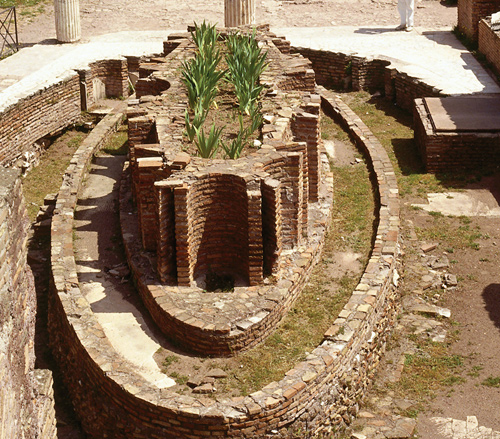
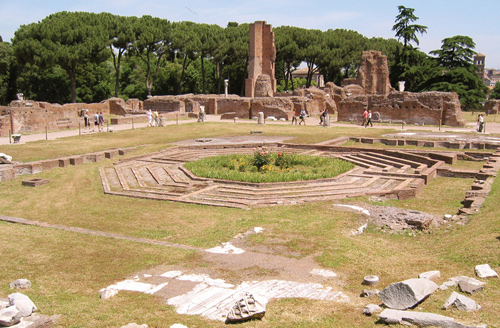
Domus Flavia
Marked
today mainly by the remains of two fountains, this imposing edifice was
the official wing of a vast emperors’ palace, built by Domitian in AD
81.

Domus Flavia
Livia’s House
This
1st-century BC structure, now below ground level, formed part of the
residence of Augustus and his second wife. Here you can examine a number
of mosaic pavements and wall frescoes.

Palatine Museum and Antiquarium
This
former convent houses a wealth of artifacts unearthed here, including
pottery, statuary, ancient graffiti and very fine mosaics. You can also
study a model of the Iron Age Palatine.
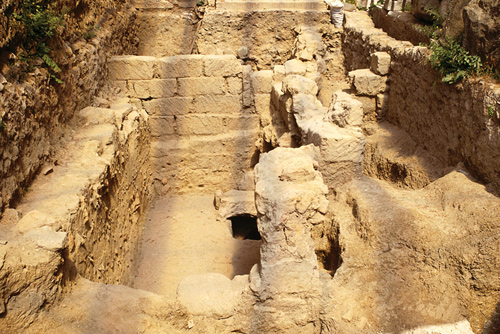
Romulus’s Iron-Age Huts
Traces
of the three 9th-century BC huts were uncovered in the 1940s. Legend
says that this tiny village was founded by Romulus, who gave Rome its
name .
Stadium
Possibly a racetrack, or just a large garden, this sunken rectangle formed part of Domitian’s palatial 1st-century abode.
Domus Augustana
All that remains of the private wing of Domitian’s imperial extravaganza are the massive substructure vaults.

Temple of Cybele
The
orgiastic Cult of the Great Mother was the first of the Oriental
religions to come to Rome, in 191 BC. Still here is a decapitated statue
of the goddess. Priests worshipping Cybele ritually castrated
themselves.

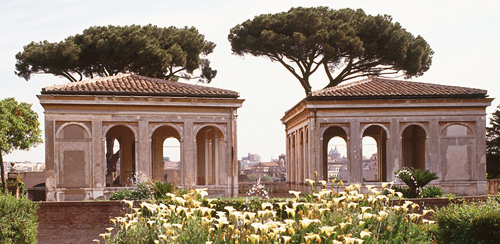
Farnese Gardens
Plants
and elegant pavilions grace part of what was once an extensive
pleasure-garden, designed by Vignola and built in the 16th century over
the ruins of Tiberius’s palace.

Farnese Gardens
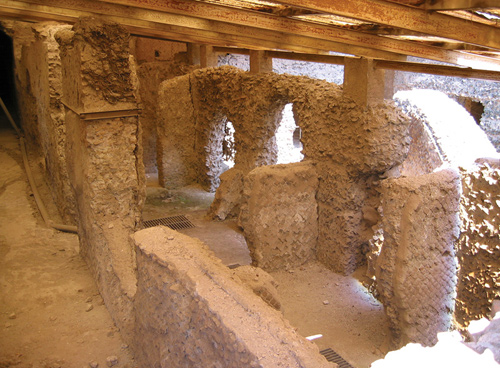
Cryptoporticus
This
series of underground corridors, their vaults decorated with delicate
stucco reliefs, stretches 130 m (425 ft). It connected the Palatine to
Nero’s fabulous Golden House .
Domus Septimius Severus
Huge arches and broken walls are all that remain of this emperor’s 2nd-century AD extension to the Domus Augustana.
A Day in the Life of a Roman Household
Most Romans lived in insulae,
apartment buildings of perhaps six floors, with the poorest residents
occupying the cheaper upper floors. An average Roman male citizen arose
before dawn, arranged his toga, and breakfasted on a glass of water.
Then out into the alleys, reverberating with noise. First, a stop at a
public latrine, where he chatted with neighbours. Next a visit to his
honoured patron, who paid him his daily stipend. Lunch might be a piece
of bread washed down with wine. Bathing waited until late afternoon,
when he met his friends at a public bathhouse. There he lingered –
conversing, exercising, reading, or admiring the artwork – until
dinnertime. The main meal of the day was taken lying on couches, with
his slaves in attendance. Then it was bedtime. Roman matrons, apart from
their time at the baths, spent the entire day at home, running the
household.

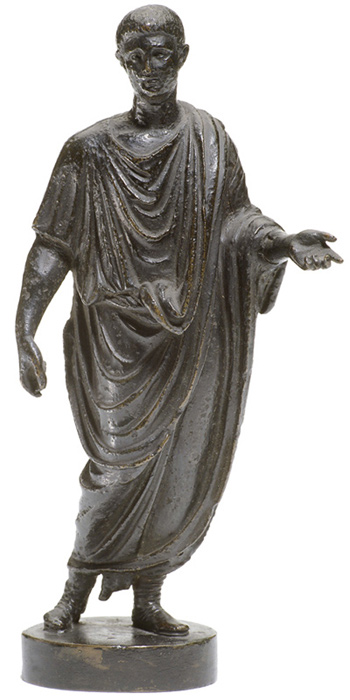
Roman toga
Top 10 Ancient Roman Belief Systems
State Religion of Graeco-Roman Gods (especially the Capitol Triad: Jupiter, Juno, Minerva)
Household Gods: Ancestors and Genii
Cult of Cybele, the Great Mother
Deification of Emperors, Empresses and Favourites
Orgiastic Fertility Cults
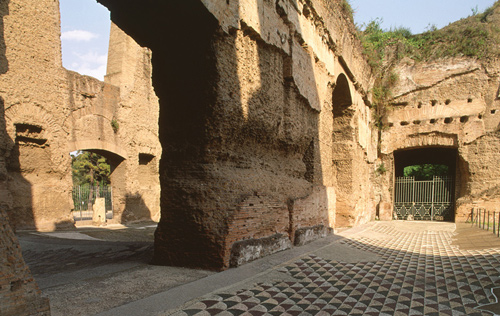
Roman Bathhouses
As the centre of Roman social life, bathhouses were grandiose
affairs, as seen in the remains in the Baths of Caracalla .