Rome’s Top 10 : Underground Sights (part 1)

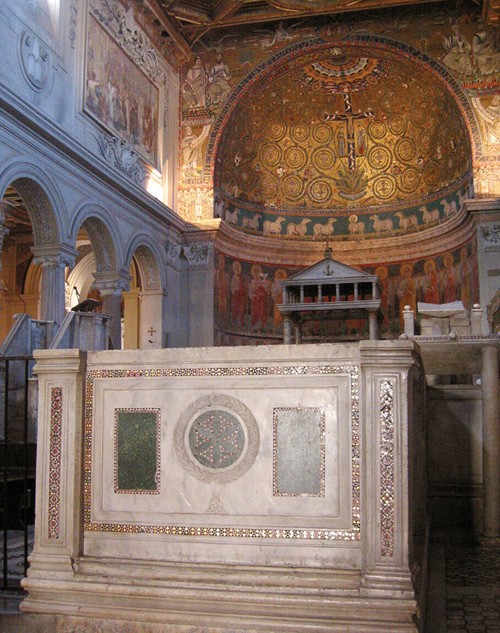
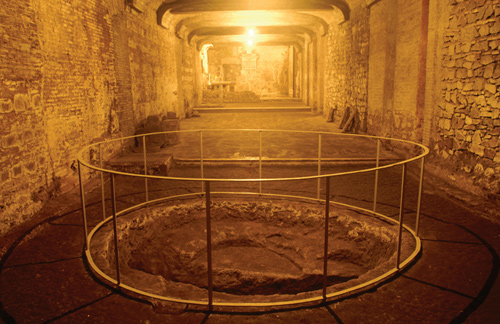
  1. San Clemente

    The many layers of this fascinating church reveal the changing ideals of Rome in various eras .


    Ceiling, San Clemente


    Underground font, San Clemente

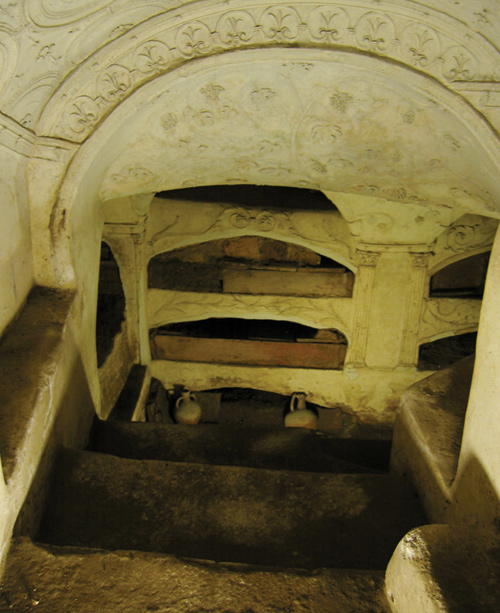
  2. Catacombs

    The
    burial tunnels of Rome’s early Christians are like a honey­comb beneath
    the consular roads out of Rome, especially along Via Appia Antica.
    Grave niches stacked like shelving along dark corridors are carved into
    the tufa, with some precious remnants of fresco and engraved marble
    slabs .


  3. Vatican Grottoes

    The famous Red Wall behind which Peter was supposedly buried was discovered under the Vatican in the 1940s .

  4. Nero’s Golden House

    Like
    most of “underground Rome”, Nero’s fabulous and vast palace was not
    originally buried. But when Renaissance worthies such as Raphael chopped
    holes in the roof and lowered themselves into the sumptuously decorated
    rooms on ropes, they called the spaces “grottoes”, and named the
    intricate frescoed designs of foliage and fantastical creatures
    “grotesques” .


    Nero’s Golden House

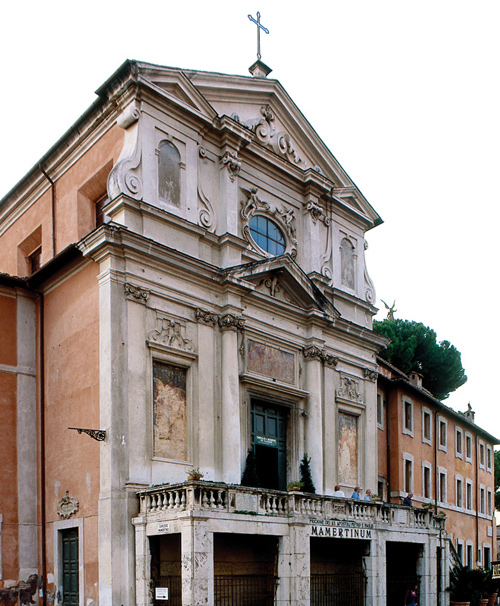
  5. Mamertine Prison

    This
    was Rome’s ancient central lockdown (built 7th–6th century BC). Among
    its celebrity inmates were Vercingetorix, a rebel Celtic chieftain,
    styled the last king of Gaul, who was brought to Rome in chains, and St
    Peter, who left an impression of his face where the guards reportedly
    slammed him against the stairwell wall. Downstairs is also the alleged
    column to which St Peter was chained.


    Mamertine Prison

    • Via S Pietro in Carcere/Via Tulliano

    • Open 9am–12:30pm, 2–5pm (winter), 9am–12:30pm, 2:30–6:30pm (summer) daily

    • Donation

  6. Crypta Balbi

    A jumble of excavations from all eras, including a piece of 13 BC crypta
    (porticoed courtyard) attached to a destroyed theatre. The museum’s
    didactic panels, which are an excellent introduction to Rome’s layer
    effect, plus the medieval frescoes are more interesting than the rather
    plain excavations underneath.

    • Via delle Botteghe Oscure 31

    • Open 9am– 7:45pm Tue–Sun

    • Adm

  7. Casa di SS Giovanni e Paolo (Celian)

    This
    house under an ancient church belonged to two Constantinian officials,
    martyred in AD 362. There is also a series of buildings, including a
    frescoed nymphaeum, dating from the 1st to 4th centuries.

    • Clivio di Scauro/ Piazza SS Giovanni e Paolo

    • 06 7045 4544

    • Open 10am–1pm, 3–6pm Thu–Mon

    • Adm

    • DA

  8. Museo Barracco

    The
    museum’s basement dates from the 4th century AD: walls, flooring,
    column stumps, a bit of cornice and sculpted relief, a marble basin and a
    large double pestle for hand-grinding grains can be seen .

  9. Pompey’s Theatre

    Pompey’s
    61–55 BC theatre is still evident in the curve of medieval buildings on
    Largo del Pollaro. Its fabric is visible only in the basements,
    including the downstairs rooms of the da Pancrazio restaurant installed
    in the ancient travertine corridors.

    • Piazza del Biscione 92

    • Open 12:30–2:30pm, 7:30–11pm Thu–Tue

    • Free

  10. Mithraeum under San Stefano Rotondo

    Under
    this church lies a 2nd-century AD shrine to Mithraism, a popular
    religion among Rome’s soldiers and lower classes while Christianity was
    gaining with patricians .

    • Via di S Stefano Rotondo

    • 06 3996 7700

    • Book in adv

    • Adm