The Vatican is the world’s smallest nation, covering
just 50 ha (120 acres), and is a theocracy of just over 550 citizens,
headed by the Pope, but its sightseeing complex is beyond compare.
Within its wall are the ornate St Peter’s Basilica (see Features of St Peter’s Basilica), the astonishing Sistine Chapel (see Sistine Chapel Works),
lush gardens, apartments frescoed by Fra’ Angelico, Raphael and
Pinturicchio, and some 10 museums. The latter, detailed on these pages,
include collections of Egyptian, Greek, Etruscan and Roman antiquities;
Paleochristian, Renaissance and modern art; and a world-class
ethnographic collection.
Museums and Sistine ChapelViale Vaticano
www.vatican.va
06 6988 3333 Open 8:30am–6pm (last admission 4pm) Mon–Sat and last Sun of month Closed 8, 25, 26 Dec, 1 & 6 Jan, 11 Feb
St Peter’s BasilicaPiazza S Pietro 06 6988 1662 Open 7am–7pm daily
|
The Vatican Museums (a
15-minute walk around the Vatican walls from St Peter’s) are made up of
10 collections plus the Sistine Chapel and papal apartments. To see
highlights only, first visit the Pinacoteca, to the right of the
entrance turnstile. The Sistine and other collections are to the left. |

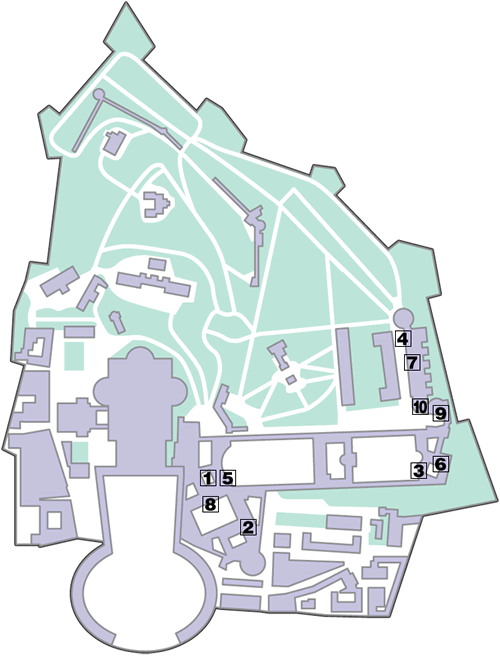
Plan of Vatican City
| There is a café inside the Vatican Museums although it is often crowded. |
|
| When in town, the
Pope gives a mass audience on Wednesday mornings. Book the free tickets
in advance through the Prefecture of the Papal Household (Fax 06 6988
5863). |
|
Top 10 Features
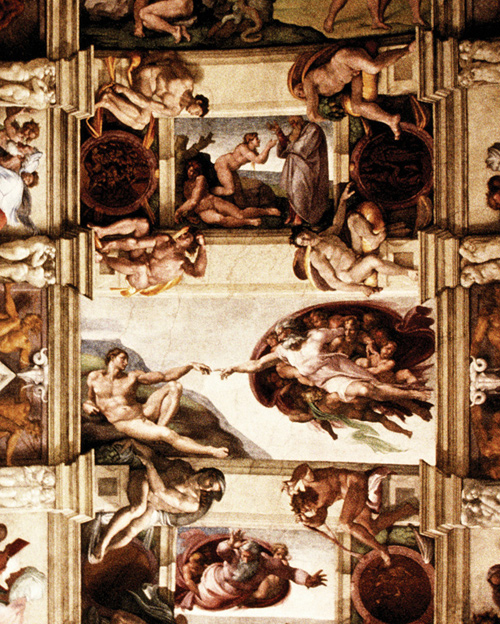
Sistine Chapel
Michelangelo’s ceiling is one of the most spectacular works of art in the world (see Sistine Chapel Works).


Raphael Rooms
Raphael
decorated Julius II’s apartments between 1508 and 1520. The Stanza
della Segnatura features the School of Athens, a convention of ancient
philosophers bearing portraits of Renaissance artists such as Leonardo
da Vinci as bearded Plato in the centre.
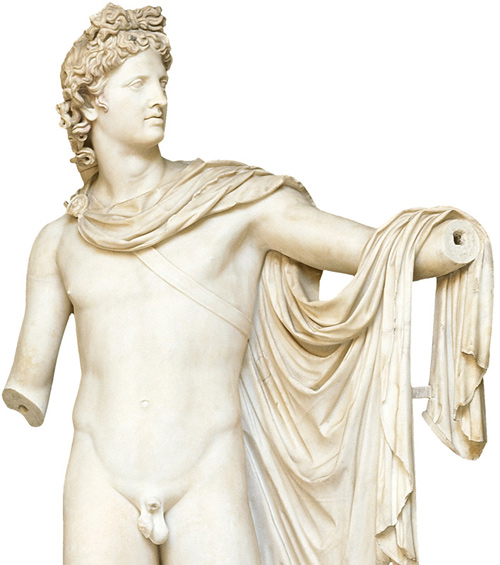
Apollo Belvedere
This Roman copy of a 4th-century BC Greek statue is considered a model of physical beauty. It inspired Bernini’sApollo in Galleria Borghese.

Raphael’s Transfiguration
Raphael
was labouring on this gargantuan masterpiece (1517–20) when he died at
37, leaving students to finish the base. It depicts Christ appearing to
the Apostles in divine glory.
Chapel of Nicholas V
The Vatican’s hidden gem is this closet-sized chapel colourfully frescoed (1447–50) with early martyrs by Fra’ Angelico.
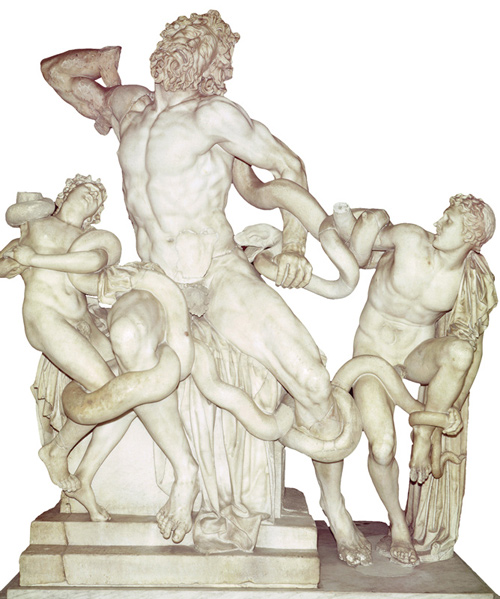
Laocoön
One
of antiquity’s most famous sculptures is this 1st-century AD Trojan
prophet and his sons being strangled by serpents as they try to warn
against the besieging Greeks’ sneaky gift horse.

Caravaggio’s Deposition
Caravaggio’s chiaroscuro technique accentuates a diagonal composition (1604) filled with peasant figures and grisly realism.
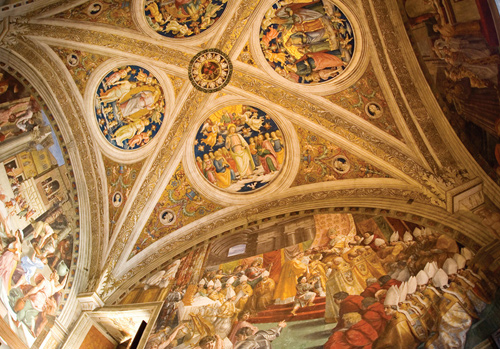
Borgia Apartments
Pope
Alexander VI had these beautiful rooms frescoed by Pinturicchio
(Raphael was once his junior collaborator) between 1492 and 1495. The
walls are now hung with lesser pieces from the Modern Art collection.
Belvedere Torso
The
highly crafted, bulging muscles of this 1st-century BC torso of the god
Hercules were regularly used as a prime sketching model for
Michelangelo and many other Renaissance masters.
Leonardo da Vinci’s St Jerome
Sketchy and unfinished – Leonardo was often a distracted genius – this 1482 painting is nevertheless an anatomical masterpiece.