California Academy of Sciences
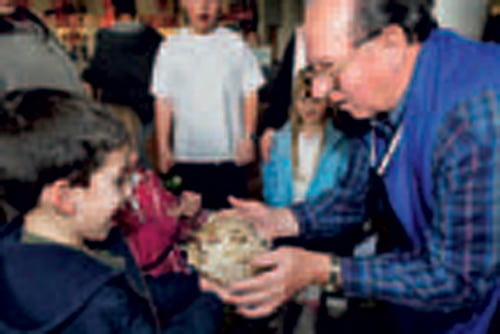
A spiky specimen from the Academy
Stroke
a starfish, get cozy with hermit crabs, or pick up a sea slug in this
hands-on, hands-wet attraction, part of the California Coast exhibits.
The pool is staffed by volunteers who will tell you what you’re handling
and keep the animals safe, too. Hours vary, since the creatures get a
much deserved time-out from time to time.Coral Reef
This
is the deepest living coral reef display in the world, exhibiting a
range of aquatic life from the coral reefs and mangroves of the
Philippines. Corals, sharks, rays, sea turtles and reef fishes can be
viewed from the surface, and close-up through underwater windows and a
glass bridge.

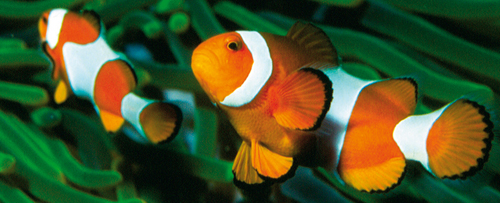
Clownfish in the Coral Reef exhibit
Rainforests of the World
Visitors can experience four diverse rainforest environments in a vast
glass dome: the Amazonian Flooded Forest, the Borneo Forest Floor, the
Madagascar Rainforest Understory, and the Costa Rica Rainforest Canopy.
This includes a diverse range of creatures: piranhas, flying lizards,
poison-dart frogs, parrots, geckos, chameleons, and butterflies.California Coast
Explore
habitats from salt marshes to turbulent rocky inlets and meet a variety
of native birds, fish, and invertebrates. The main tank – an exhibit
featuring the marine habitats of the Gulf of the Farollones National
Marine Sanctuary – is 100,000 gallons in capacity, with large viewing
windows, and a crashing wave surge system.Penguin Feeding Time
The
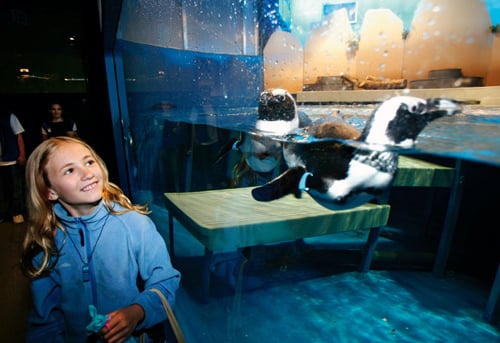
nine pairs of black-footed penguins located in Africa Hall are fed
twice daily, and it’s always a spectacle that the whole family enjoys.
Penguins may waddle on land, but their grace is evident when you observe
them dive and glide effortlessly through the water to catch their meal.

Penguin Feeding Time
|
Kids love the Naturalist Center, on the second floor, where there are multimedia displays and art activities. |