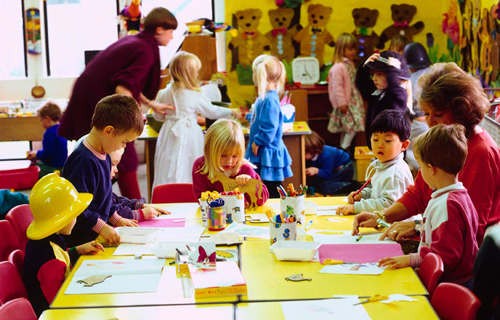
Talented but not motivated
It can be
frustrating if your child appears to be unconcerned about achieving,
though you know that with a little application he’ll do great things.
Motivating a young child is a delicate business; his learning is highly
dependent on enjoyment and interest rather than straining toward a
distant goal. If he’s disengaged at school, talk to his teachers to make
sure he’s being given varied work with both playful and practical
elements to keep his interest. He may be motivated by rewards for extra
effort, such as stars or points for completing a task.
You can support his
gift or talent by making learning out of school fun. For example, visit
places of historic, sports, or artistic interest. Most museums have
interactive exercises and multimedia information designed to engage,
entertain, and teach. No matter how you feel, try to avoid nagging,
lecturing, or forcing extra study as these rarely improve motivation,
and can lead to resentment and resistance from your child.
NOTE
The greatest
influence on your child’s self-esteem is your love, affection, praise,
and recognition that she’s lovable no matter what
Supporting your child’s aspirations Or pushing her too far?
You are your child’s
biggest fan: You see the best in her, have pride in her achievements,
and hope she does well. You are in the best position to ensure she has
opportunities to learn and develop through your support of her interests
and schoolwork. Research tells us that the greatest influence on a
child’s academic achievement is the involvement of parents in her
education.
Choice
Offer your child
the opportunity to experience a range of hobbies or interests. Once
she’s tried each one a couple of times, prompt her to choose the
activities she thinks she will enjoy. Some of these may involve learning
new skills or even, eventually, lead to a career.
Diversity
It’s difficult to
predict exactly where your child’s long-term aptitudes and interests
lie, so avoid focusing on only one specific area of development. Getting
engaged with several hobbies or sports means that if she tires of one
or isn’t achieving to her satisfaction, she has others which will
maintain her self-esteem and interest.
Motivation
Practice sessions that focus on small achievements, rather than being a set length of time, are more encouraging.
Balance
All children need free
time. If your child is over-scheduled with organized activities,
homework, and practice, she’ll miss out on what many see as the work of
childhood—play. She’ll also have fewer opportunities to occupy herself, a
key skill she’ll need as she gets older.
Pushing too hard
Before you go all out to
get your child started on extracurricular activities, examine your own
motivation. Ask yourself whether you’re working in your child’s
interests or acting out your own aspirations, perhaps hoping she will
achieve the dream you once had? It may be that you want her to keep up
with a certain set of children or to reinforce some friendships over
others. Perhaps she’s struggling to make friends and classes may help
her meet new children, or you’re concerned that too few activities makes
it appear that you’re not supportive of her. Carefully consider how
many extra activities she can handle.
Playing along
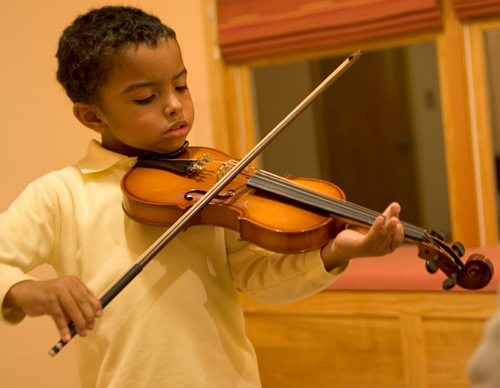
Do encourage your child to
take part in extra hobbies and interests, such as music lessons, but
remember it’s your child’s pleasure in the experience that will keep him
motivated.
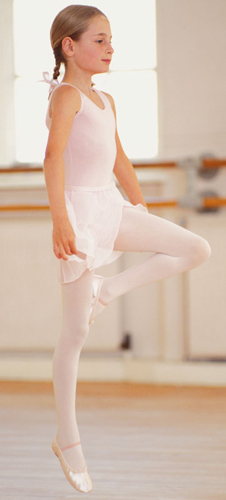
Prima ballerina
If your child is
gripped by a certain activity, for example ballet lessons, and has a
balance of school and family time, then there is no reason to hold her
back from doing what she wants.
Is my child really a genius? Talented and gifted Children
“Gifted” and “talented” are
the new buzz words for children who are, or show potential to be, high
achievers. These are the accepted phrases you’ll find used within the
education system. Your child fits the category of gifted if she excels
in one or more academic subject, such as math or English. The term
“talented” is applied if your child shows an aptitude in practical,
physical, or creative subjects such as sports, design, music, or the
arts. To determine if your child is gifted or talented is not always
easy; the opinion of yourself and your child’s teachers, as well as
high-quality work and test results, are used to reach a conclusion. It
is not known how many gifted children there are in the population, but
as a rough guide 10–15 percent of children are usually placed in this
category. Signs may not become apparent until she is at least six or
seven. Be prepared to have your assessment that your child is a genius
challenged. She doesn’t need to be gifted to do well at school and in
life.
Recognition
It is important
that your child’s abilities are recognized by school staff so that the
curriculum can be adapted to keep her engaged and avoid problems of
boredom. Sometimes teachers are concerned about identifying special
talents, since they worry that concentrating on one child will
disadvantage others in the class. However, not to do so can both impede
your child’s progress and result in classroom management difficulties.
Self-direction
When she’s encouraged
to identify her own interests and learning preferences, your child will
achieve more at school. Self-direction is usually limited to free play
for a younger child, but will increase as she moves through the school,
as she gains more autonomy to select methods of learning herself.
Balance
Whatever your child’s
talent or gift, she still needs free time to relax, play, or simply be
with you. She may also benefit from low-key activities outside her area
of special interest. For example, if she’s focusing on an academic
topic, then leisure time could include physical or outdoor pursuits. A
family walk, bike ride, or swim can be a refreshing change from
homework.
Difficulties
School is not always
plain sailing for your gifted or talented child. If lessons are not well
adapted, she may find the work is too easy, and boredom may set in.
This can lead to frustration or misbehavior. You may have to work hard
yourself to keep up with her learning so you can support her homework
tasks. Whatever your child’s talent, she’ll benefit from your support.
When you praise and reward her effort, you build her self-esteem and
identify her as someone who tries hard. This way she won’t be so
dependent on coming first or winning for her sense of self-worth.
Paying attention
Whether your child is
gifted or not, she’ll benefit from a wide range of activities and close
interest from both teachers and you.