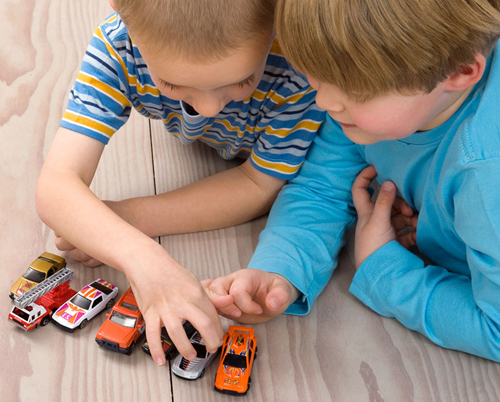
Friendship skills A complex activity
It may seem that making
friends just happens, an effortless side effect of your child playing
with others and having fun. However, underneath this apparently simple
activity, a host of personal and social skills are being tried and
tested.
Give and take
Your child’s
ability to share, developed gradually between ages three to five, will
stand him in good stead as a friend. Children will prefer to play with
him if he can hand over a toy rather than hog it, and if he is willing
to follow their play ideas as well as suggest his own. Encourage him to
be a good team player by setting up and supervising games or activities
involving cooperation and praise him frequently when he gets along well
with others. Remember, your child is still working on skills such as
cooperating, so things won’t go smoothly all the time.
Creativity
Friendships have
to be started somehow, often through a shared and playful activity. When
your child has the imagination to start up a game and spark the
interest of others, he creates an opportunity to make and strengthen
friendships. Simple ideas work best—perhaps he just shouts out to a
group of children, “Let’s play pirates,” or presents a challenge like,
“Who’s fastest at running around the swings?” Whatever happens, he’s
having fun and drawing other children to him.
Empathy
Getting along
with other children involves your child tuning in to their needs and
feelings as well as recognizing and regulating his own. His ability to
understand and react to others’ emotions has grown from his experience
of you being responsive to his feelings. When you soothe him you teach
him how good this feels, and the value of doing the same for others. At
age four you might see him comforting friends by sitting close and
patting them, or knowing when to call an adult to help out. As he
matures, he’ll use words to calm his friends, try to problem-solve, and
may challenge other children if they’ve done or said something hurtful.
Help him to tune in to his friends by asking him to imagine how they
feel and how he’d feel in the same situation.
Opportunity
The more time your
child spends with a friend, the stronger that friendship is likely to
be, as each gets to know the other more fully. Encourage bonds to grow
by providing plenty of out-of-school playtime and activities with
others. Get to know the parents of your child’s friends so you’re
comfortable for him to visit their houses, and they can let their
children come to yours. This way you may find you build your own social
networks at the same time as you support his.
Personality
Your child’s
temperament will also influence his friendships. Outgoing, confident
children often prefer a larger group of friends, while shy or quiet
children tend to be at ease with a small number of playmates with whom
they have a closer relationship. There is little value in pushing your
child to have more or fewer friends than he wants. However, do take
active steps to help friendships grow if your child wants to, but lacks
the confidence to do this alone.
Cementing friendship
It is common for
children around six or seven to strengthen their group identity by
setting up a group or club, sometimes giving themselves a name or
constructing a den. This is a way to build bonds, but may also create
problems. Rivalry can develop between groups, or situations occur where
children are anxious about being left out or thrown out. Many schools
discourage clubs as a consequence. It is up to you to judge whether your
child is engaged in a playful and positive group who share values and
enjoy the idea of being a club, or if the group identity is having a
negative influence. If your child’s school discourages clubs, support
their efforts—they’re acting out of concern for the children’s
well-being.
Tips for making friends
Time together
Create
frequent opportunities for your child and his new friend to spend time
together. Arrange play dates at each other’s houses, set up a shared
carpool, or take them to the park together.Work together
Friendship
will be strengthened when children have a project or shared goal to
achieve. Set tasks or challenges which encourage them to communicate,
plan, and work as a team. You could suggest a task such as making a
clubhouse in the yard.Your
child needs to recognize when to lead a play activity and when to follow
the ideas of others. Being controlling is often a confidence issue, so
build his self-esteem with praise and games at home to reduce his need
to dominate.Understanding
Good
friends notice and show sympathy to others’ feelings and celebrate or
comfort as needed. Be sure your child is tuned in to others’ emotions by
teaching and talking about feelings at home. You could also role-play
different situations, modeling a good response for your child to copy.Go second
When
your child is prepared to let his friend go first some of the time, to
share toys, or lose at a game without storming off, he’ll be rewarded
with firm friendships. Close supervision, rewards for good
sportsmanship, and plenty of practice in taking turns at home build
these abilities.Making up
If your
child has a fight with his friend, help him to resolve it right away to
avoid lingering resentment. A quick explanation and apology is often all
that’s needed, and playtime can start again.Make friends yourself
Sociable
children tend to have sociable parents, so work on your friendships,
too. When you make friends with the parents of your child’s friends
you’ll create more chances for them to play together too.
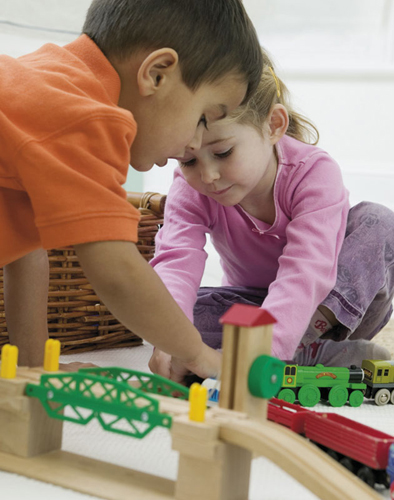
Teamwork
Playing or working together on a shared task to achieve a common goal will help strengthen budding friendships.
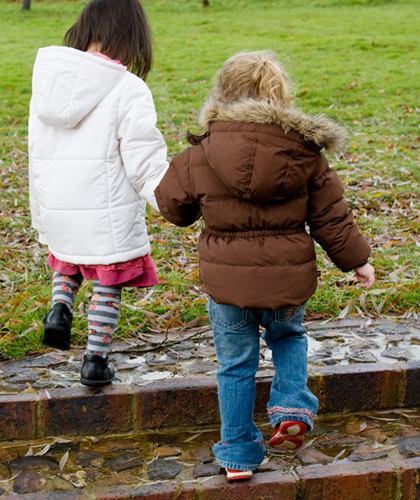
Hand in hand
Being able to feel empathy for others and sharing emotions, whether happy or sad, are important aspects of friendship skills.
Taking turns
Learning to share and play cooperatively is an important skill for this age, helping your child to make friends.