In the late 19th century,
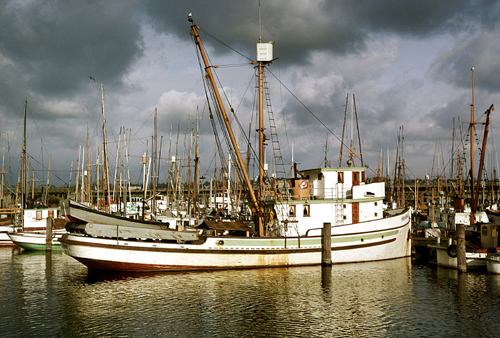
Scandinavian loggers and fishermen established a working waterfront
which is still functioning a full century later. Seattle annexed Ballard
in 1907, taking advantage of the huge economic growth the mill town
fostered; by then Ballard was the state’s third largest city. Seattle’s
commercial fishing fleet resides at Fishermen’s Terminal just across
Salmon Bay. The late 1990s dot.com boom made real estate prices
skyrocket, and scores of boutiques, art galleries, and restaurants
opened, reflecting the changing demographics. Popular tourist
attractions include the Hiram M. Chittenden Locks and Golden Gardens.
The Nordic Heritage Museum celebrates the culture of the area’s
Scandinavian Americans, and every May 17, the annual Norwegian
Constitution Day Parade takes over the streets.
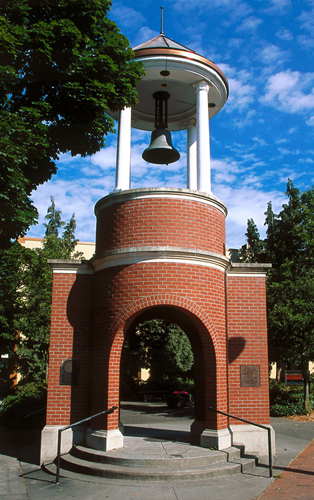
Belltower, Ballard
|
|
|
Sights
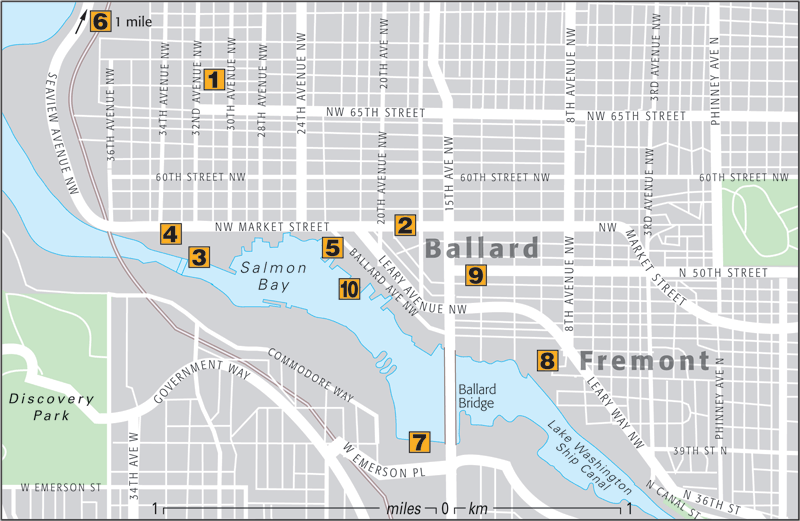
Nordic Heritage Museum
With
rooms organized by country, this museum illustrates the links between
Scandinavian people in the Pacific Northwest. Founded in 1980, it’s the
only museum in the United States to revere the legacy of immigrants from
five Nordic countries – Denmark, Finland, Iceland, Norway, and Sweden.
It also enlightens visitors with rotating and permanent exhibits such as
colorful Old World textiles, rare china, books and bibles, woodworking
tools, and carved wooden ale bowls. There is also a music library.3014 NW 67th St
Adm
Market Street
The
nerve center of Ballard has a vast selection of stores, cafés,
Scandinavian gift shops, and taverns lining both sides of the street.
Although Ballard is only about 4-miles (6-km) northwest of Pike Place Market,
the street’s melange of local businesses and creative signage reflects
the community’s small-town personality that has remained intact since
the days before Ballard officially became part of Seattle.The Locks
Every year, 100,000 vessels pass through the Ship Canal’s Hiram M. Chittenden Locks,
and nearly as many tourists come to marvel at the site between Salmon
Bay and Shilshole Bay. Named for a retired US Army Corps of Engineers
general, the Locks’ sophisticated engineering, and the sheer variety of
pleasure boats and industrial ships that are able to pass through,
impress visitors. The Locks also feature fish ladders to allow migrating
salmon to leave from or return to their home streams, best observed
between June and November. Don’t miss the small but fascinating
visitors’ center, with its informative short film and displays.Visitors’ center
Winter (Oct 1–Apr 30) 10am–4pm; Summer (May 1–Sep 30) 10am–6pm
Carl S. English, Jr. Botanical Gardens
Take
a little time for a delightful promenade through the greenery of lush
trees and rare and exotic plants that fill the garden’s seven acres,
bordering the Locks on the north side of the Ship Canal. The gift shop,
which also serves visitors to the Locks, makes a guide available to
assist in identifying the plants.3015 NW 54th St
Ballard Avenue
From the roaring 1890s through the Great Depression, the four block stretch of brick-paved Ballard Avenue defines the raison d’etre
of a mill town that also had a thriving boatbuilding and fishing
industry. The 19th-century architecture is gorgeous, and it’s easy to
imagine a street filled with timber millworkers, salty fishermen,
fishmongers, and the banks, saloons, and bordellos that served them. In
1976, Sweden’s King Carl XVI Gustaf read the proclamation that
identified Ballard Avenue as a National Historic District.Golden Gardens
Ballard’s
largest park, and one of Seattle’s true urban escapes, includes 87
acres of forested trails, beaches, picnic areas, and great views of
Puget Sound and the Olympic Mountains. Originally, the gardens stood at
the end of the line for electric streetcars which were funded by
realtors, who wanted Seattle residents to get away from the city’s noise
and grit. Cool summer nights along the shore bring groups to huddle
around bonfires, while sunny days see hundreds of revelers getting tans
or playing volleyball in the sand. There is also an off-leash area for
dogs, and a boat ramp at the marina.Fishermen’s Terminal
The
terminal provides moorage for more than 700 commercial fishing vessels
and workboats. Because of the sheltered port and the area’s supporting
industries and businesses, many Northwest commercial fishermen regard
Seattle as the best center for maintenance and repair. The bronze and
stone Fishermen’s Memorial sculpture, inscribed with the names of more
than 500 local men and women, commemorates lives lost during the hard
and dangerous work of fishing in Alaska. There are two seafood
restaurants on the docks – one’s a carry out with dockside tables.3919 18th Ave W

Fishermen’s Terminal
Sunday’s Farmer’s Market
Like
many neighborhoods in Seattle, Ballard attracts weekend shoppers by
organizing regional farmers, artists, and craftspeople to fill
closed-off streets with an Old World market. The lovely brick pavement
and 19th-century architecture along Ballard Avenue form the backdrop for
a pleasant walk for the visitors. The market operates year round, but
when summer is in full swing, growers from the arid eastside of the
Cascade Mountains bring their bounty of organic produce, range fed
chickens, and hormone-free beef to sell.Bardahl Sign
Whether
you travel by foot, bicycle, car, bus, boat, or plane, the towering,
flashing, red neon advertisement for Bardahl automotive oil treatment
makes for an unusual icon for any neighborhood. From distant hilltops,
the sign’s manic ascending flashes harken back to the industrial roots
of Ballard, and to company founder Ole Bardahl, Ballard resident and
Norwegian immigrant. The sign is one of Seattle’s favorite, if most
garish, urban landmarks.Salmon Bay Industries
With
the opening of the Sinclair Mill in the 1890s, Ballard was given the
title “Shingle Capital of the World” as it was instrumental in
rebuilding Seattle after the havoc wreaked by the Great Fire of 1889.
Smaller firms and manufacturers, machine shops, and foundries settled
in to stake their claims as well. Today, the area has not changed much.
Skirting Ballard’s southern waterfront along the Ship Canal, Salmon Bay
industries include dry dock repair and maintenance for ocean-going
container ships and barges, and a large gravel company whose equipment
dominates the skyline.