Discover one of Seattle’s most electrifying
neighborhoods on the long ridge that stretches northeast of downtown.
The large gay, lesbian, and transgendered resident population helped to
create a vibrant culture reflected in street scenes that hover on the
outside edge of mainstream society. But Capitol Hill is much more than a
magnet for self expression, although you may see more dyed and spiked
hair and imaginatively applied body piercings than elsewhere in Seattle.
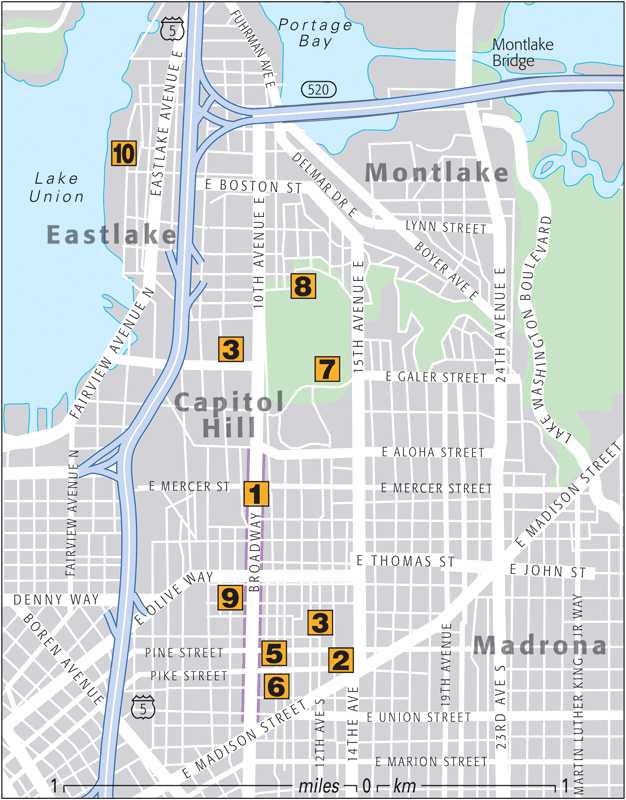
Abundant shops, clubs, restaurants, and cafés along Broadway, Pike and
Pine Streets, and 15th Avenue East draw crowds from all over the city.
Key attractions include two vintage movie theaters — the Harvard Exit
and the Egyptian Theater — the Cornish College of the Arts, the Central
Seattle Community College, and the Seattle Asian Art Museum in the
sylvan setting of Volunteer Park. There are quiet streets nearby that
boast some of the most lavish private residences in Seattle.
Seattle pastime
|
|
|
Sights
Broadway
If
you can buy it, you can find it on Broadway, the nerve center of
Capitol Hill. From East Pike to East Roy Streets, storefronts beckon
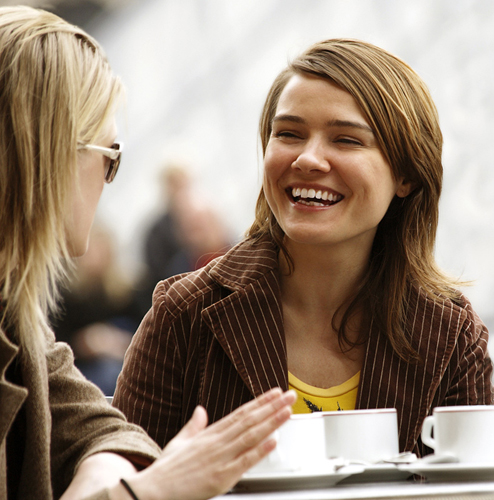
consumers on the hunt for food, vintage and new clothing, music CDs, and
lots of coffee. On summer evenings especially, the sheer density of
pedestrian traffic along Broadway matches that of midtown Manhattan.Pike/Pine Corridor
Bisecting
Capitol Hill are two busy streets offering their own flavor and
subculture. You can find many of the area’s gay and lesbian hangouts on
the blocks above and below Broadway, as well as a great selection of
taverns and stores selling vintage housewares and furnishings. Although
the city has tried to discourage their postings, you may also notice
colorful flyers stapled onto telephone poles and virtually any surface,
advertising band concerts in the vicinity. If nothing else, they draw
attention to the pulse that keeps this community living and breathing on
the edge.Cathedrals
Capitol
Hill has a number of landmark places of worship, including the grand
St. Mark’s Episcopal Cathedral, which belongs to the Diocese of
Olympia. Organ enthusiasts come from afar to play St. Mark’s 3,944-pipe
Flentrop organ, installed in 1965. The Saint Nicholas Russian Orthodox
Cathedral, one of the oldest parishes of the Russian Orthodox Church
outside of Russia, was founded in 1930 by immigrants who fled the 1917
Russian Revolution. The structure’s ornate turquoise lukovitsa (16th century “onion dome” style of cupolas) and spires rise high above the trees and neighboring homes.St. Mark’s Episcopal Cathedral
1245 10th Ave E
St. Nicholas Russian Orthodox Cathedral
1714 13th Ave
Gay/Lesbian Scene
Alternative lifestyles are not only tolerated, but encouraged with flagrant same-sex smooching and handholding on the streets. Gay and lesbian clubs proliferate on the Hill, as do shops selling what used to be called marital aids — sex toys in today’s parlance.
Hendrix Statue
Darryl
Smith, an artist once based at the Fremont Fine Arts Foundry, created a
lifesize bronze statue of Jimi Hendrix that now graces the Pine Street
sidewalk. It shows the musician in his trademark rockstar pose, kneeling
in bellbottoms with his Fender guitar pointed skyward. Before Paul
Allen built his Experience Music Project,
inspired by Hendrix and his music, this installation was Seattle’s best
known memorial dedicated to the city’s famous guitarist.Richard Hugo House
Writers
and readers have enthusiastic support from this institution, named for
Richard Hugo (1923–1982) a local writer, instructor, and community
builder who became one of the most acclaimed American poets of his time.
The center advances Hugo’s vision by bringing innovative and effective
writing programs and workshop education to people of all ages and
backgrounds. Visitors are welcome to tour the 16,206-sq-ft (1505-sq-m)
Victorian house, built in 1902.1634 11th Ave
206 322 7030
Open 9am–6pm
Volunteer Park Observation Tower
Built
by Seattle’s water department in 1906, this 75-ft (23-m) brick tower
with an observation deck was designed by the Olmsted Brothers. A short
climb of 106 spiraling steps to the deck offers spectacular views of
Puget Sound, the Space Needle, and the Olympic Mountains. Volunteer Park
is also the site of the Seattle Asian Art Museum and the Volunteer Park Conservatory.Lake View Cemetery
This
1887-era cemetery, on a hilltop just past the northern end of Volunteer
Park, is the final resting place for prominent Seattleites, and
attracts thousands of visitors each year. Tombstones here identify the
pioneers whose names now grace present-day streets or area towns –
Denny, Maynard, Boren, Mercer, Yesler, and Renton. Lake View also draws
the faithful followers of cinema star and martial arts master, Bruce Lee (1940–1973), and his son Brandon, whose sculpted tombstones lie side by side.1554 15th E
206 322 1582
Neighborhood Homes
Stroll
down the 3-block stretch of Denny between Broadway and Olive Way to
scout for charming Victorian and Craftsman-style homes and elegant
balconies decorated with hanging flower baskets or off-beat art. Marvel
at the opulent mansions on the blocks just south of Volunteer Park.
Capitol Hill’s adjacent Central District, south of Madison and north of
14th Avenue East, is a transitional neighborhood but features view
properties with gorgeous old homes – best seen by car.Eastlake
An
entire neighborhood disappeared when Interstate-5 cut a trough at the
base of Capitol Hill. The sliver of a community that remains is called
Eastlake, named after the main thoroughfare. Today, it survives as a
mixed-use residential community at Lake Union’s edge, popular with
students, artists, and water-lovers as exemplified by the community of
houseboats. REI’s flagship store marks the beginning of Eastlake’s commercial area, and farther north,
the neighborhood opens up with taverns, cafés, and stores that revel in
the geography – halfway between downtown and the University District.