Sous Vide Cooking (part 5) – Cooking with Sous Vide – Fish and other seafood

3.2. Fish and other seafood

Fish
cooked sous vide is amazingly tender, moist, and succulent. Unlike fish that has been
sautéed or grilled—cooking methods that can lead to a dry and rough texture—sous vide
fish can have an almost buttery, melt-in-your-mouth quality. Other seafoods, such as
squid, also respond well to sous vide cooking, although the temperatures do vary.


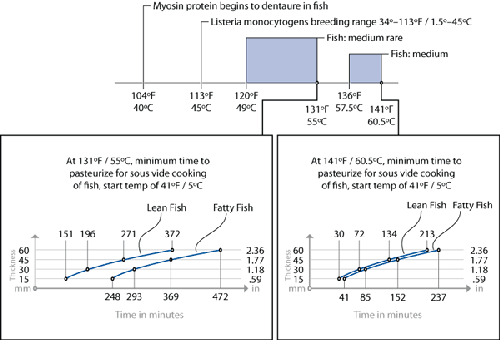
Time at temperature chart for fish and seafood.
Cooking fish
sous vide is so straightforward that you don’t need a recipe to understand the concept.
The following tips should help in your experimentation with sous vide fish:

  • Fish cooked to a doneness level of medium rare (131°F / 55°C) or more undergoes
    pasteurization by being held at temperature for a sufficient length of time (see the
    time-for-thickness graphs provided for lean and fatty fish).

  • Lean fish, such as sole, halibut, tilapia, striped bass, and most freshwater
    fish, require less time to cook and pasteurize than fattier fishes, such as arctic
    char, tuna, and salmon.

  • For fish cooked to a doneness level of only rare (i.e., cooked in a water bath
    set to 117°F / 47°C), pasteurization is not possible. Thus, if you are poaching
    salmon at 117°F / 47°C, be mindful that it will not actually get hot enough to kill
    all types of bacteria commonly implicated in foodborne illnesses. (Salmonella,
    fortunately, is not prevalent in fish.) Cooking fish at 117°F / 47°C for less than
    two hours presents no worse an outcome than eating the fish
    raw, so the usual recommendations for fish intended to be served raw or undercooked
    apply: buy sashimi-grade, previously frozen fish to eliminate parasites, and don’t serve the fish to
    at-risk individuals.


    Note:

    The FDA’s 2005 Food Code excludes certain species of tuna and “aquacultured”
    (read: farm-raised) fish from this requirement, depending upon the farming
    conditions (see FDA Food Code 2005 Section 3-402.11b).


  • If your fish comes out with white beads on the surface (coagulated albumin
    proteins), brine it in a 10% salt solution for 15 minutes before cooking. This will
    “salt out” the albumin via denaturation.

Sous Vide with Prepackaged Frozen Fish

The
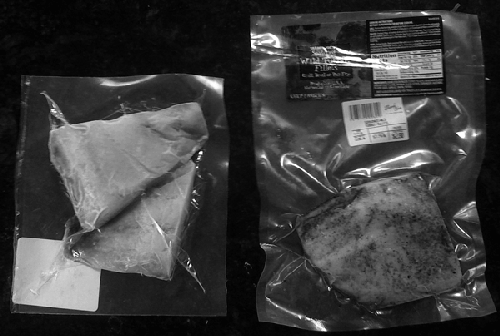
grocery stores where I live sell frozen fish in vacuum-packed bags. In some cases,
the fish, which has been cut into individual portions, is frozen in marinade, making
it the perfect sous vide–ready food: it’s already vacuum-packed; it has been frozen
per FDA standards, thus killing common parasites; and it has been handled minimally,
having been frozen and sealed shortly after catch, reducing chances of bacterial
cross-contamination. The time is ripe for sous vide to catch on big time: the food
industry is already selling food in sous vide–ready packaging!

My favorite use of sous vide—well, besides making so many foods just plain
delicious and easy to prepare for dinner parties—is using prepackaged frozen fish to
make my daily lunch. My routine is fast, easy, cheap, and yummy:

Fill sous vide container (a pasta pot, in my case—I have an industrial circulator)
with hot water from the tap. Using hot water means I don’t have to wait for the
immersion circulator to heat up the water.

Drop frozen vacuum-packed fish in the water, as-is, straight from the freezer.
Because it’s a single portion, the amount of time it’ll take to thaw is relatively
short. Just remember: pasteurization times start once the core of the food has reached
the target temperature. With a frozen item, you’ll have a hard time knowing when this
occurs. I cook a single portion of fish for long enough to ensure that both thawing
and pasteurizing have occurred. And because sous vide cooking is forgiving of longer
cook times, for most types of fish leaving them in the water bath for an extra half
hour won’t affect the quality.

Fish out the bag, cut it open, drop the fish on a plate with some steamed veggies
and brown rice, and voilà: lunch.


Note:

If you’re preparing yourself a meal ahead of time, you can drop the cooked fish
into a container with some frozen veggies, which do double duty by acting as ice
cubes to rapidly cool the fish down.


The quality of frozen fish can really vary. Frozen salmon from one store can turn
out mushy and unappetizing, while the same type of salmon from a different chain can
come out moist, succulent, and perfect. This is mostly likely due to differences in
freezing techniques: rapid freezing does less damage to the tissues by limiting the
amount of time ice crystals have to aggregate and form larger, dagger-like shapes that
can pierce cell walls. If you’ve had bad results with frozen fish, blame the freezing
technique, not the fact that it has been frozen.