Strategies for schoolchildren : Coping with school paperwork, Organising after-school activities

Coping with school paperwork

There are peak periods
— such as the start of the school year — when, without a system in
place, I used to feel in a complete mess with all the school paperwork.
After missing a couple of important notices, I realised that to stay on
top of things I needed to develop a way of coping with the constant
influx of slips, forms and newsletters that are very much a part of
school life.

Allocating time for paperwork

One
of my biggest time wasters with paperwork was handling the same items
several times. When the kids brought me their notices after school, I’d
read them and decide whether they needed action or not. If they needed
action I’d put them aside for later. However, when later came, as I had
only skim-read the notices I’d have to read them all over again and then
action them.

Now
the kids put their notices in a folder on the kitchen bench. I don’t
worry about them until the kids are in bed. I then read them once and
action them straight away.

The school newsletter

Our
school newsletter is the main source of information we receive from the
school. To help me keep track of all the school events, once I receive
it I write all key dates on the calendar, complete the required tear-off
slips, then hang the current newsletter on a clip on the fridge for
future reference.

Sending back forms

Each
child has a communication pouch that they keep in their school bag for
the exchange of notices between home and school. In the evenings when I
fill in the forms that need to go back to school, I place the completed
forms in the kids’ lunchboxes for them. The lunchboxes sit open on the
kitchen bench each morning for the kids to collect. It’s th
e kids’ responsibility to ensure the completed forms make their way into the communication pouch and back to school.

The child information sheet

I picked up this tip
from another mother at school, so thanks to Danielle for sharing it with
me. There are a series of forms that have to be filled in at the start
of the year for each school child — for example, the Neighbourhood
Excursion form, which gives the school permission to take the kids on a
walk around the block. The forms all require particular details to be
filled in, such as the date of the child’s last tetanus injection, our
Medicare number, and our doctor’s name and contact details. This
information is also needed for other forms throughout the year (school
camp permission forms, for example).

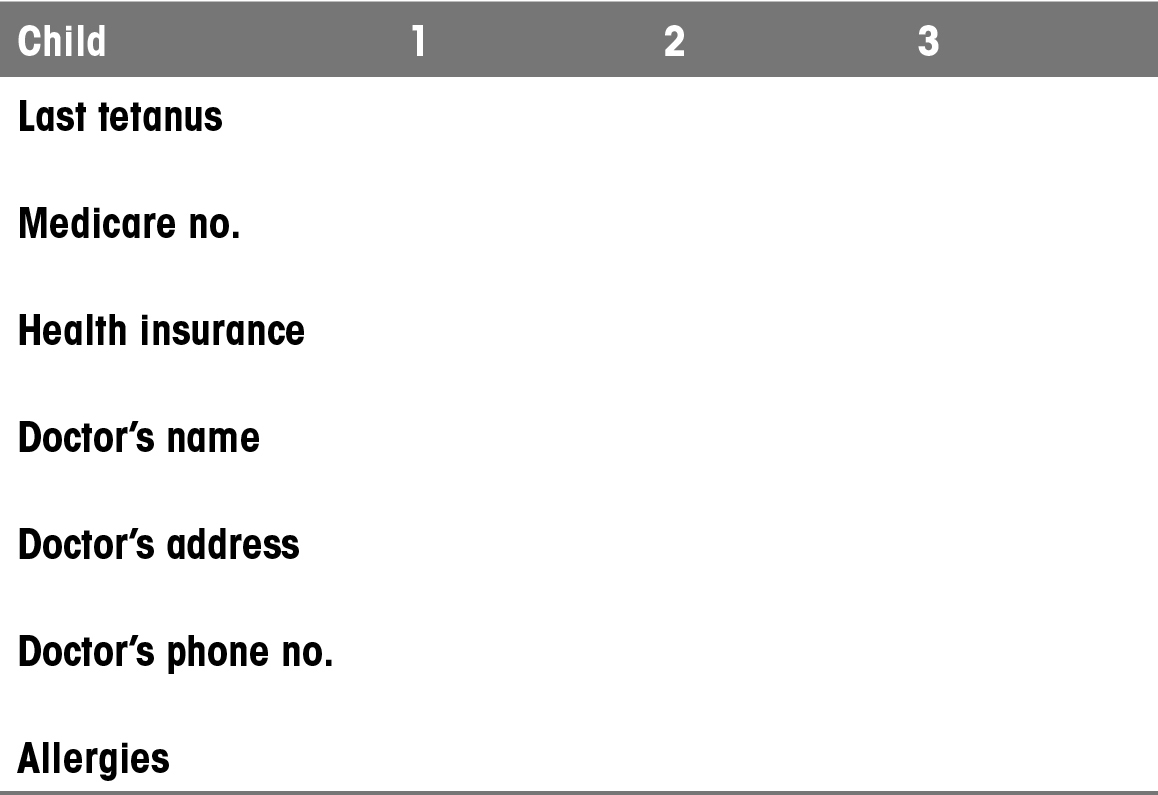
I’ve compiled a child
information sheet (see table 1) so I don’t have to find the kids’
Maternal and Child Health books and all the relevant cards needed to
complete these forms. As this information doesn’t change very often, I
can continue to use it in future years as well.

Table 1: child information sheet
missing image file


Organising after-school activities

As
each of our children starts going to school, the number of after-school
activities we have to juggle increases. If not managed well, the
after-school run-around can severely impact on my busyness and that of
the little ones.

Tip: Juggling after-school activities

The following tips have helped us manage after-school activities more effectively.

No after-school activities for preps in term one

During term one
preps are busy adjusting to attending school for long days, five days
in a row. Preps are generally very tired in term one, even if they’ve
attended childcare full time in the past. A tired prep means an
emotional child, so I find the less for them to do after school, the
better. Even if a prep child has to come along to their older siblings’
activities, at least they’re not having to listen to and follow
instructions in a structured environment.

Sharing the driving

Once the kids have
settled into their new after-school activities, I’ve found it incredibly
helpful to find another family with whom I can share the drop-offs and
pick-ups. For example, I only take my daughter to her dance class once a
fortnight. Another lovely mum, Kate, and I alternate bringing the girls
home from school and then taking them to and from dancing.

Playing in the park

I’ve noticed that I take
my younger children to play in the park less often than I did the older
ones. Training grounds for cricket and football are usually located
near a playground so I make the most of these opportunities by playing
with the kids at the nearby playgrounds.

Playing games

One of the items I keep
in my everyday bag is a pack of cards. If we’re attending an
after-school activity for one child at an indoor space, it’s an
opportunity to sit with the younger children and play cards. Pencils and
paper or a colouring book are also handy for making the most of our
time together.

Limiting the number of activities

Children can often
overestimate their energy levels so we limit the number of after-school
activities they participate in. Education consultant Kathy Walker
recommends only one to two activities for children aged four to eight.

We
restrict the number of after-school activities to two per child. With
three children who currently participate in after-school activities,
this means we can have up to six scheduled events after school.
Thankfully, all our children have chosen swimming as one activity and we
have them all enrolled on the same day at the same time. Even with this
efficiency, some terms we only have one school night per week with no
scheduled activity.

Dinner comes first

As the children get
older, the after-school activities start later, often around 5.30 or
6.00 pm. By the time they’ve finished, it’s very late for the younger
children (aged six and under) to eat dinner. So on the days when we have
late finishes I swap afternoon tea with dinner time.

When the children come
home from school, they just have a piece of fruit and then I serve
their evening meal at around 4.30 pm. I then pack a healthy snack for
them to have on the way home from the after-school activities. This
change in routine has two advantages: the children actually eat all of
their dinner, and I don’t have hungry (as well as tired) children
waiting at after-school activities.

Having dinner prepared

When
I do my menu planning, I make sure I factor in after-school activities.
On days when we’ll be out and about straight after school, I make sure I
prepare something earlier in the day — or a plan for a very quick meal —
so we can eat at the usual time.

Completing homework

I encourage our children
to do their homework on the nights when they don’t have after-school
activities. This prevents situations where they’re up late finishing
homework because we’ve arrived home late.

Ensuring enjoyment

It’s
important to stop every so often to check that your children are
actually enjoying their after-school activities. We keep it simple for
our children: they can choose what they want to do, but if they start an
activity they must see it through to the end of the term or season. If
they no longer want to do that activity once the season or term has
finished, they can stop.

Booking after-school activities early

It’s
important for us to book or rebook after-school activities as early as
possible. For after-school activities such as swimming,

doing so means we have a
greater chance of having all our kids in the pool for their lessons at
the same time. One swimming time compared with three different ones
makes my life much easier.