Potentially risky behavior Smoking, drinking, and sex
Most teenagers
experiment with smoking, drinking alcohol, and sexual activity.
Initially this is out of curiosity, because everyone else is doing it,
and because it is pleasurable. How do parents know when experimentation
becomes a problem?
Smoking
Preventing your
youngster from starting to smoke cigarettes may be considerably easier
than preventing him from drinking alcohol because of the clear
anti-smoking messages in most societies now. His reasons for trying
tobacco will likely be that it looks cool, his friends are doing it and,
once he has got over the initial unpleasantness of the taste of
nicotine, the nausea and dizziness, he will find it hard to stop.
Smoking is also a bonding activity that has been enhanced by
anti-smoking laws: Smokers now tend to gather outside in huddles in
order to smoke. Start early with your anti-smoking message to impress
upon him that avoiding smoking is an important and desirable thing. It
is wise to concentrate on short-term consequences, since teenagers are
not good at taking long-term health risks into account when making
decisions about current behavior. Highlighting the cost of a pack of
cigarettes and what else he could buy with the money may be much more
persuasive than a warning about lung cancer 10 years down the line. Or
how bad it makes her breath smell, and that it stains her teeth and
fingers (however, to some teens, stained fingers are cool). In order to
educate your teenager about the longer-term consequences, you may need
to be more creative. The ravages of smoking are much clearer on older
people who have been smoking all their lives, so seeing Grandad
struggling with respiratory problems or comparing the wrinkles of
smoking and non-smoking family members, may serve as a warning. Being a
good role model is crucial. If you are a smoker, you may have been a
powerful deterrent to him when he was young. But now that he is a
teenager you are more likely to be an excuse for him to smoke as well.
Now is the time to kick your habit. Your experience may serve as a
powerful lesson for him to learn about the addiction to, and withdrawal
from, nicotine.
Smoking
Many try cigarettes but will not continue past adolescence.
Drinking
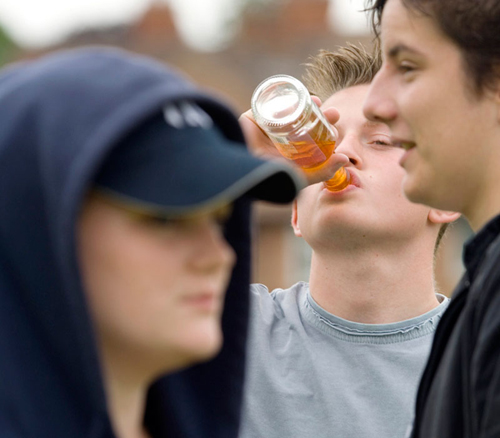
Experimentation with
alcohol is complicated by the mixed messages that exist in society. It
is very challenging for parents to give clear guidance to their teenage
children about drinking when they are not abiding by it themselves.
Whatever the reason was for starting drinking, teens end up doing it for
the same reasons as their parents: To party, to be more socially
attractive, to forget their troubles, to lift their mood, and to cope
with shyness, anxiety, and stress.
As parents we should
probably be tougher and clearer on alcohol use and abuse than any other
drug. It is the most pervasive and destructive. As with other
conversations about substance misuse, the advice is to keep talking,
keep calm, be informed, and be a good role model. Make clear what you
consider to be acceptable: A couple of beers at a family party or total
abstinence before the legal drinking age. Explain your limits and your
consequences. For example, being brought home disheveled and disoriented
after being on the winning team at school may elicit only a warning the
first time. When it happens a second time, you may want to impose a
consequence such as being grounded for the next Saturday night. Parents
will have to take account of their own behavior and values, but need to
take care not to confuse their children with their own displays of
drunken behavior and jokes about it in others. Worrying signs in a
teenager might be denying that they are drinking too much, being too
interested in opportunities for a drink, and making excuses for needing
one. If you find your child drinking alone and not being able to
remember what he did the night before, it’s time to act. There are
excellent services for young people struggling with alcohol and drug
problems and they are usually easily accessible by young people
themselves. If you are struggling, ask your doctor to direct you to
them.
Alcohol
Teens drink for the same reasons as their parents.
Sex
For parents, sexual
experimentation brings with it fears of pregnancy, sexually transmitted
diseases (STDs), and a fundamental challenge to your parenthood: Your
child is becoming a sexual being. Teens now have sex younger and with
more sexual partners, which serves to increase the risks and your fears.
Sexual experimentation starts early with masturbation. Girls and boys
masturbate, often using erotic fantasies about film stars and
celebrities from music and sports. Masturbation and sexual fantasy is
normal and acceptable in the right place at the right time. You could
see this as practice for the real thing later, with real people. Your
attitude to masturbation as parents will set the scene for how your
child approaches sexual activity later. If she feels guilt and shame,
she may approach sexual encounters with a less-healthy attitude. Talking
about sex can be embarrassing and awkward for parents and teens. Try to
be proactive and factual when talking about sex. Don’t wait until she
approaches you; it may never happen. Talk about her right to say no and
the age-old ploys that will be used to put pressure on her to have sex:
“If you love me you’ll sleep with me.” Boys and girls have different
approaches to sexual relationships: Boys will have sex if the
opportunity arises; girls are more concerned with sex as part of a
meaningful relationship. Give her information, advice, and practical
help about contraception and prevention of STDs. Talk about the emotions
involved in an intimate relationship. Emphasize that intimacy is not
all about intercourse; there are many other ways of being intimate.
However, do not be too intrusive, choose your timing for these
conversations, and respect her privacy. Finally, if she approaches you
with a question that alarms you, about HIV, for example, try not to
freak out before you calmly find out the context of the question. As
long as your teen is well informed, prepared, and protected, deciding to
have sex is a choice she alone can make.
Role model
A healthy attitude to sex will help your teen to be prepared.

Commonly used substances Slang names, effects, and risks
The best way to communicate with your teen about drugs is to be well informed and to keep it casual.
Alcohol
Effects
Relaxation, exaggerates your mood so can make you maudlin, aggressive, euphoric. Hangover the next day.
Risks
Slurring
words, falling over, vomiting. Increased vulnerability to rape,
robbery, aggression. Physically and psychologically addictive. Heavy and
long-term use leads to liver damage, cancer, heart disease.
Tobacco
Effects
Relaxation, reduces hunger, increased heart rate and blood pressure, satisfies craving for nicotine.
Risks
Nicotine
is extremely addictive and very difficult to give up. Increased
vulnerability to coughs, chest infections, cancer, emphysema, heart
disease. Risk to others from passive smoking.
Marijuana
Street slang name
Weed, dope, grass, herb, ganja, marijuana, joint, skunk, buds, (and many others).
Effects
Relaxed, happy, talkative, mildly hallucinogenic, increase in hunger.
Risks
Anxiety
and paranoia; can become dependent; increased risk of mental illness in
those with a previous or family history; affects learning and
concentration.
Solvents
Gas (for example,
butane from cigarette lighters or butane gas lighter refill cans), glue,
aerosols, nitrous oxide (N2O) from whipped cream canisters.
Street slang name
Thinners, gas.
Effects
Drunk, dizzy, giggly; can hallucinate, enhanced sounds. Hangover and headaches, sometimes red rash around the mouth.
Risks
Suffocation
if using plastic bag to inhale; vomiting and blackouts; heart, brain,
liver, and kidney damage from prolonged use; coma from overdose and
death due to reckless behavior.
Ecstasy
(active ingredient: MDMA)
Street slang name
E, XTC, pills, X, sweeties, M&Ms, eckies, brownies, doves.
Effects
Enhances
sounds and colors; makes people chatty; full of love and empathy for
others. Full of energy or desire to sit cuddling. Increase in heart rate
and body temperature. Can experience a marked come-down following
taking E.Risks
Anxiety,
panic, confusion, paranoia. Sleep deprivation. Danger of overheating
and dehydration or overhydration. Often cut with other substances.
Mental health problems. Liver, kidney, and heart problems due to
excessive use or if mixed with other substances.
Cocaine and crack
Street slang name
Cocaine:
coke, Charlie, snow, dust. Crack cocaine: crack, rocks, stones, base,
white, freebase (although freebasing has a different method of
manufacture).Effects
Short,
intense high. Hyperconfident and wide awake. Increases heart rate, body
temperature, reduces appetite. May increase libido. Followed by
hangover, low mood (which may include paranoia), and intense cravings.Risks
Extremely
addictive—temptation to achieve the high and avoid the come-down. Risk
of overdosing, can cause fits or heart attacks. Encourages risk-taking
behavior. Panic attacks, anxiety, and paranoia. Smoking (usually crack)
and injecting (which is rare) have risks of infection and respiratory
problems. Combinations of cocaine and other drugs increases risk,
especially with tranquilizers.
Amphetamines
Street slang name
Speed, phet,
uppers, billies, dexies, paste, base. Base tends to refer to “uncut”
speed, which hasn’t been watered down with another substance, typically
glucose, yet.Effects
Creates a wide-awake, energized feeling. Users appear buzzy, restless, talkative. Reduces appetite.
Risks
Addictive.
Hard to come down, irritability, anxiety, depression. Combinations of
amphetamines with alcohol or antidepressants or relaxants such as
benzodiazepines or heroin can be fatal.
Crystal Meth/methamphetamine
(type of amphetamine)
Street slang name
Ice, glass, Christine, yaba, meth, crystal, crank.
Effects
Euphoric stimulant. As discussed for Amphetamines, but more intense. Usually smoked or injected. Rapid heart rate and increased blood pressure.
Risks
Particularly
addictive if injected. More dangerous than speed. Confusion, agitation,
paranoia; violent behavior. Long-term use may lead to psychosis.
Overdose can cause stroke, kidney, lung, or gastrointestinal damage,
coma, death. Increases sexual activity with risk of infection. Dangers
of infection from injecting with dirty needles. Dangerous if taken with
MAO inhibiter antidepressants.
Heroin
Street slang name
H, horse, brown, gear, smack, skag.
Effects
Intense
euphoria, warmth, and well-being. Dulls psychological and physical
pain; induces relaxation, sleepiness. Slows down bodily functions.Risks
Very
addictive, as a tolerance quickly develops. Dizziness and vomiting.
Choking on vomit, as suppresses gag reflex. Overdosing causes
respiratory depression, leading to death. Dangers from injecting with
shared or dirty needles: Gangrene and HIV/AIDS, hepatitis.
LSD
Acid, dots, Lucy, drop, tabs, rainbows, paper mushrooms.
Effects
Distortions of color, sound, time, vision. Heightens mood. Can have good and bad “trips.”
Risks
A bad trip
can be traumatic and last for up to 12 hours. Users may experience
flashbacks weeks or months later. Can trigger preexisting mental-health
problems.
Tranquilizers
Street slang name
Benzos, vallies, downers, mazzies, jellies, eggs.
Effects
Calm, relaxed, sedated. Higher doses may cause a deep sleep. Slows down the body’s functions.
Risks
Highly
addictive, particularly benzodiazepines (Valium/diazepam is frequently
used). Extremely unpleasant withdrawal effects. Can be dangerous if
mixed with alcohol or stimulants. Short-term memory loss.
Ketamine
Street slang name
Ket, K, special K, vitamin K, cereal.
Effects
Used
medically as a dissociative anesthetic, sometimes for animals. Users
take a fraction of the medical dose to achieve a mental and body high.
Can feel very connected to objects or other humans. High doses cause a
“K-hole”—feeling removed from reality and set adrift in a dream-like
world, often involving complete dissociation.Risks
Severe
confusion, nausea, vomiting, susceptibility to accidents (from
uncoordination and change in perception of body and time). Frightening
distortion of reality. Depression of heart rate and respiration. Bladder
problems. Psychologically, but not physically, addictive.
Magic mushrooms
Psilocybe semilanceata or “liberty cap” and amanita muscaria or “fly agaric.”
Street slang name
Liberties, magics, mushies, shrooms.
Effects
Similar
to LSD. Distortions of perception. Emotionally sensitive. Can feel very
connected to others. An experience outside in nature tends to be more
pleasant.Risks
Fly agaric is more potent and more risky. Can have bad trips leading to disorientation and ensuing flashbacks.