One to three years What to expect at each stage
Over the next two years,
your toddler will strive to be increasingly independent. He will become
more mobile, learn about his environment, himself and other people, and
develop speech and language skills. Be prepared—your child will start to
have opinions and want to do things his way. Support your child’s
efforts at independent thinking, and his self-confidence and self-esteem
will increase, giving him the skills he needs to succeed in the big
wide world.
At 12–18 months, children may
Be walking on
their own. Children may still fall occasionally, but they can move
quickly and love to explore. Make sure that their environment is safe:
Use stair gates and check that furniture is stable.Learn
to feed themselves with a spoon and use a cup to drink from. You will
soon be able to tell if your child will be left- or right-handed.Look
for favorite toys they can’t see. Your child is forming a stronger
mental picture of his world and can think about things that are not in
his immediate environment. This includes you too!Know their own name and turn when called—unless they are busy!
Enjoy
listening to nursery rhymes and sitting on your knee to look at books
and pictures. Sing and talk to your child as much as you can.Start
to use single words. By using these words in a different context,
changing the intonation of the voice and using gestures, “holophrases”
(single words used to represent a phrase or sentence) can have lots of
different meanings. “Milk” could mean “I want more milk” or “I have
dropped my milk.” These holophrases won’t be around for long, though, as
your child is getting ready for a language explosion in the next few
months.Look
to you for guidance about how to behave in unfamiliar social
situations. If you look happy and offer words of encouragement, they
will approach new toys and people with confidence.Start
to engage in pretend play by copying what they have seen you do. Your
child may pretend to cook or clean, make coffee, and fix things using
real objects.
At 18–24 months, children may
Walk up and down stairs, run, jump, and climb. Your child can get to wherever he wants—there is no stopping him now.
Begin to recognize their reflection in the mirror and identify themselves in pictures.
Have good bowel control. It could be time to think about toilet training. Don’t force this issue though—go at your child’s pace.
Help dress and undress themselves. (They will still need your help with buttons and zippers.)
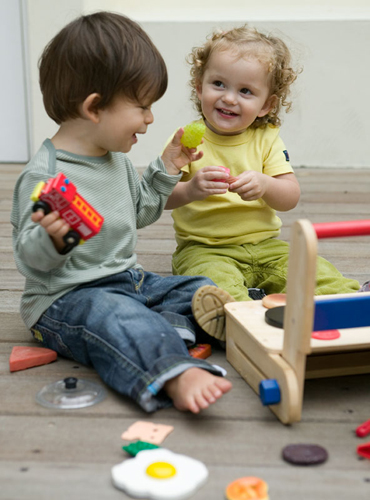
Move
gradually from playing alongside other children to playing
cooperatively with them, taking turns, sharing, and working on play
activities together.Develop
their own pretend-play routines rather than copying what they have seen
you do. Dolls, action figures, and teddy bears may be put in charge of
directing the action. Children will also enjoy scribbling on paper,
pouring water and sand, and throwing a ball.Begin
to say how they feel and recognize that other people have emotions that
can be different from their own. This will lead on to developing
empathy.Begin
using lots of words now to name objects, people, and places they are
familiar with. Words may also be combined into two-word sentences such
as “Mommy gone” and “More milk.” Remember that children understand much
more than they can say.
At two to three years, children may
Give their name when asked.
Enjoy running and chasing games and rough-and-tumble play. Some children may also engage in playfighting with other children.
Encourage
other children to join them in a pretend game by saying “Let’s pretend
we’re.…” Your child may also use objects to represent something else—an
empty cardboard box could be a car, a house, or a pirate ship.Recognize
when someone else is feeling sad or upset, and offer them comfort by
hugging them, giving them objects, or getting help. They may also
retaliate on behalf of another child.Begin
to understand that other people see the world differently from them.
This is the basis for children to develop a “theory of mind,” which
first emerges at around four years of age. Theory of mind is your
child’s ability to put himself in someone else’s shoes and to recognize
that other people have knowledge, ideas, beliefs, and desires that are
different from his own.Be
using sentences and occasional made-up words for things they find
difficult to say, such as “yo yo” for yogurt. Conversations are focused
on the present, and your child’s thirst for knowledge about his world
may lead him to ask lots of “Why?” questions. Try to answer as many of
these as you can, and look at books together to develop your child’s
inquiring mind.
Growing independence
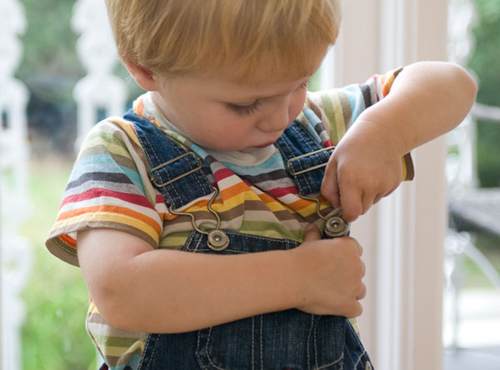
Your child will
begin attempting to dress himself. He may find buttons and zippers
tricky, so put him in clothes with simple fastenings if you can, and
help out if he gets stuck.
Better balance
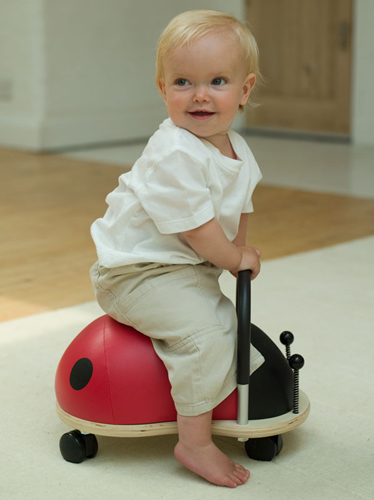
From 18 months of
age your child will have enough balance to get himself from place to
place in any way he chooses, including running, jumping, and riding on
scooters and trikes. Wheeled toys can help to develop stability and
coordination.
Joining in
Moving from
parallel play, where children play alongside each other, to cooperative
play, where they play together, is one of the milestones of this age and
is a sign of growing social skills.