Getting the behavior you want Why toddlers act the way they do
Getting the behavior you want
Praise
Warm,
honest, simple praise tells your toddler you notice her and you like
what she’s doing. It makes her eager to do more of the things you like,
and helps her feel good about herself.Pay attention
It’s
the small ways you notice your child that matter—ruffling her hair as
you go past or waving as she goes down the slide. These tell her you are
keeping her in mind even when you’re not playing together.Supervise
Being
able to play alone for short periods is common at this age, but your
child still needs you to supervise her closely for safety reasons,
companionship, and to give her praise.Keep busy
Boredom is the starting point for mischief. Your toddler has a brief attention span of around three to four minutes.
Managing the behavior you don’t want
For your child’s safety and
to help her learn to be cooperative and helpful, there are times when
you’ll need to manage risky behavior or misbehavior.
Up close and personal
When you
want your child to stop what she’s doing, whether it is jumping on the
furniture or getting too close to the hot stove, make your message
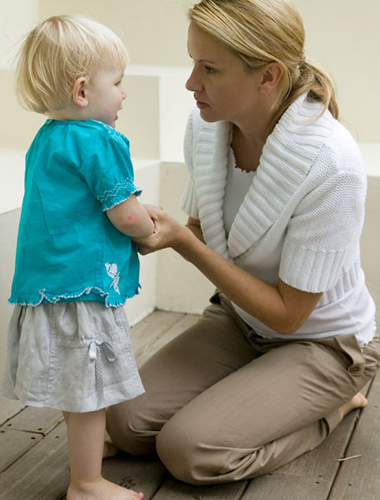
count. Squat down to her eye level, look her in the eyes, and tell her
calmly, clearly, and firmly to stop. Specify exactly what she needs to
do, for example “Stop jumping, please sit on the sofa” rather than “No.”Short and simple
If you need to give your toddler a consequence for misbehavior, make it brief and relate it to the problem.
Consistency
Your
toddler needs to know what you want her to do and what she should not
do. She’ll learn this when you apply the same rules and values
consistently, every day. If you give mixed messages, she’ll be confused
and will find it harder to behave well.Right away
If you
need to manage misbehavior, do it immediately: the link between behavior
and consequence is then clear. Delayed consequences are ineffective,
since your toddler will have forgotten what she did wrong.No
matter how irritated or exhausted you feel, never punish in anger. You
may harm your child either emotionally, through your words, or
physically. If you are ready to explode, then walk away, delay, and try
some calming strategies for yourself.Ignore
This
strategy is only useful for behavior that is irritating but not harmful
or dangerous. Ignoring means withdrawing your attention for a short time
(seconds to a minute) while your child does something like play with
her food or pester for a cookie. Once she’s stopped, that‘s the end of
the matter.Respect
Maintain
your child’s dignity by making sure, if you have to correct her, that
you do so in private and not in the presence of adults or her friends.
When she’s misbehaved let her know what the problem was, rather than
comparing her to “better” children. Always be sure to refer to choices
as “good” or “bad,” rather than calling children “good” or “bad.”
Your approval
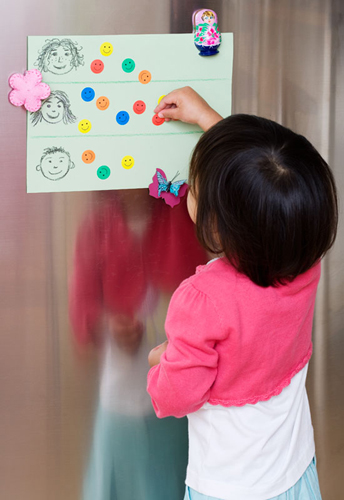
Getting a sticker for good behavior shows your toddler you like what he’s doing and raises his self-esteem.

Rewards
Sticker charts work well as motivators for behavior. You could also have them for other members of the family, or pets.
Notice the good
Showing that you notice your child when she’s playing means she won’t need to misbehave in order to gain your attention.

Eye to eye
Make sure your child gets the message when she’s misbehaved by getting down to her level to talk to her.
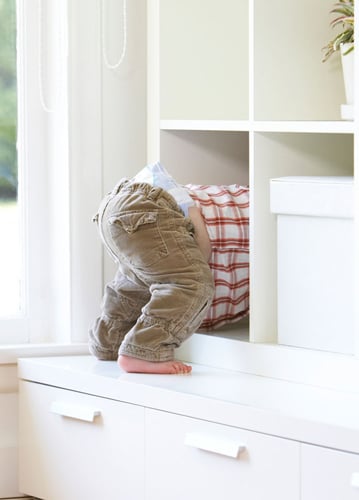
Out of mischief
You’ll need a steady stream of activities to keep your child entertained, otherwise he’ll find something else to do.
Be realistic
Your child has not yet learned to share, so expect her to get angry or upset when things don’t go her way.