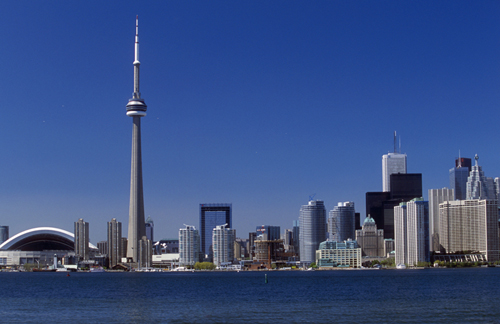
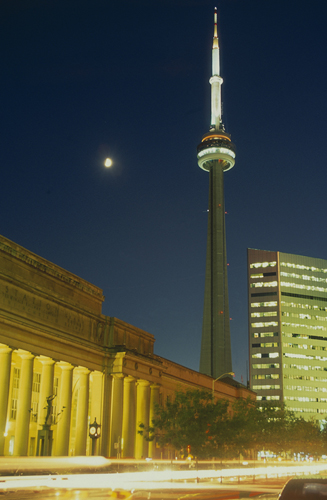
A 58-second elevator ride whisks you to the 114th
story of the world’s tallest free-standing structure, the 181-story,
1,815.5-ft (553.5-m) communications tower built by Canadian National
Railway in 1976. Breathtaking views from the glass-fronted elevator set
the stage for even more dizzying sights from the Look Out, where on a
clear day you can see as far as the Canada-US border. Visitors with
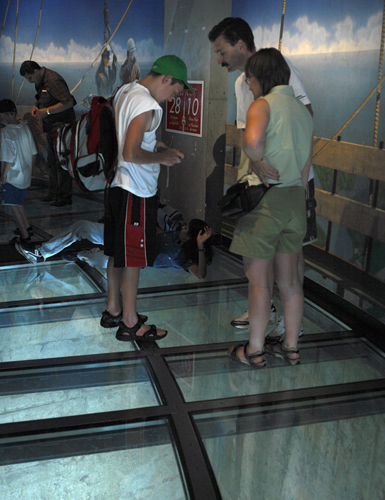
nerves of steel can walk on the Glass Floor for a view 1,122 ft (342 m)
straight down. For panoramic views 1,465 ft (447 m) above the ground,
take an elevator up 33 more stories to Sky Pod, the world’s highest
man-made observatory.
One of the seven
wonders of the modern world, the CN Tower is recognized as an
unparalleled feat of 20th-century engineering. It took 40 months, with
1,537 workers toiling around the clock, to build the tower, pouring
enough concrete to lay a sidewalk from Toronto to Kingston, 160 miles
(260 km) away. A 10-ton Russian Sikorsky helicopter was used to lift the
44 pieces of the 335-ft (102-m) antenna into place. |


The Glass Floor
Stop in at Horizons Café on
the Look Out level for casual fare and spectacular views. Or reserve a
table at the revolving 360 restaurant (416 362 5411) to enjoy fine
dining and a view that changes slowly throughout the meal. |
|
Shop for one-of-a-kind souvenirs and authentic Canadiana at the Marketplace. |
|
Test your skills with
the multimedia motion-simulation games at Edge Arcade or catch a short
film on the tower’s construction at the Maple Leaf Cinema. |
|
At the heart of City Hall’s
plaza is the Peace Garden. The roof of the structure within is
“damaged,” to symbolize world conflict |
|
Top 10 Views
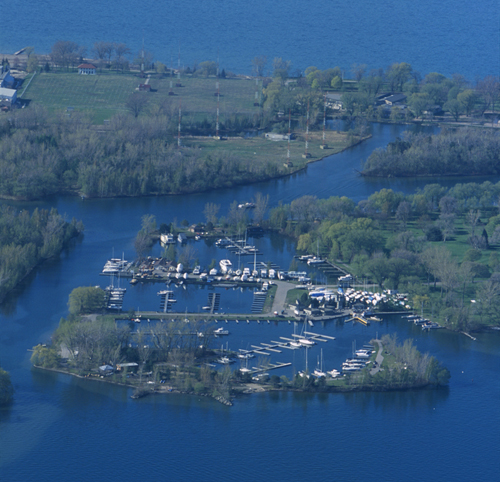
Toronto Islands
A ribbon of islands
shelters Toronto’s harbor and provides a car-free retreat just a short
ferry ride from downtown. The islands have bike paths, picnic areas,
beaches and boardwalk, and an amusement park .

Eaton Centre
Tourists and locals alike flock here for the hundreds of shops and eateries . The glass vaulted roof is modeled on Milan’s 19th-century Galleria Vittorio Emanuele.
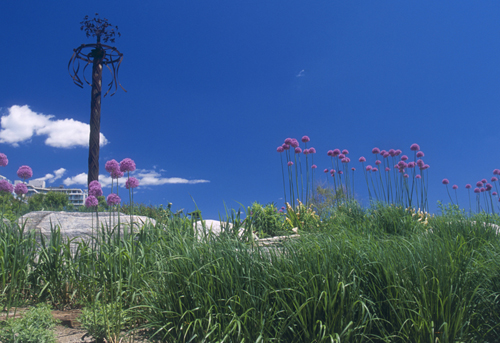
Toronto Music Garden
The
garden’s design, inspired by the music of Baroque composer J. S. Bach,
is best seen from above; the swirling pathways and plantings do indeed
seem musical.

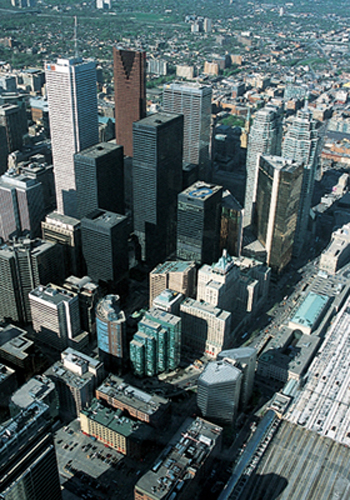
Financial District
Soaring towers, such as those of the modernist Toronto-Dominion Centre,
signal the heart of Toronto’s – and Canada’s – financial district. The
nation’s major banks, insurance companies, and stockbrokers ply their
trades as wind-jostled workers hurry along canyon-like streets.

Urban Forest
One look at Toronto from above and it’s clear it’s a green city: stately canopy trees line streets and snake along ravines.
Roy Thomson Hall
The space-age design of this music hall, in the core of the theater district, features a distinctive glass canopy .
Union Station
A relic from the days when passenger rail was Canada’s primary mode of transportation, this station
has lost none of its grandeur since it opened in 1927, still serving as an impressive gateway to the city .

City Hall
When
opened in 1965, the building, with its two curving towers, was
controversial in conservative Toronto; it has since become a much-loved
icon of the city’s modern architecture .
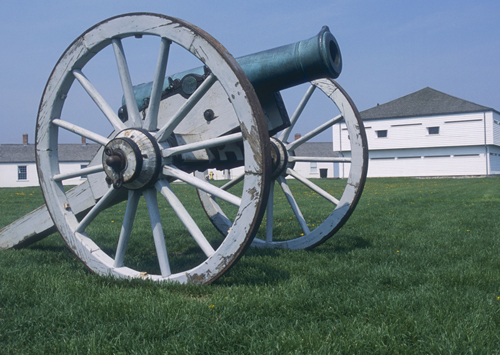
Fort York
Founded
in 1793 and the site of the 1813 Battle of York, in which the fort was
destroyed and then rebuilt, Fort York has Canada’s best collection of
buildings from the War of 1812 era. Eight original structures stand on
this triangular piece of land, among them blockhouses, barracks, and
officers’ quarters. Many of the other buildings were torn down in the
1950s .

Niagara Falls
If the weather cooperates, it’s possible to see the mists rising above Niagara Falls,
80 miles (130 km) to the southeast. The gentle curve of land along the
shores of Lake Ontario reveals why the region, which extends from
Toronto to Niagara, is known as the Golden Horseshoe.