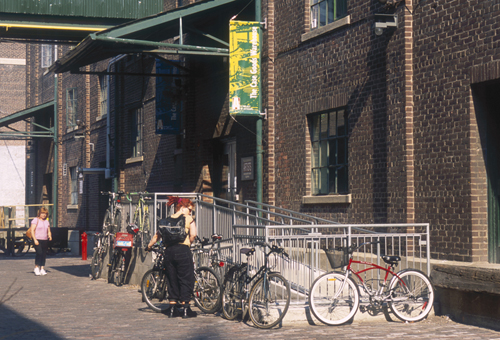
Walking the pedestrian-only cobblestone streets past
the best preserved Victorian industrial architecture in North America,
you’ll feel as if you’ve stumbled into another century. The 44 buildings
of this 13-acre (5-ha) site were, until the mid-1900s, part of
Gooderham and Worts, once the world’s largest distillery. The distillery
evolved from a grist mill founded here in 1832 by Englishman James Wort
and his brother-in-law William Gooderham. The 150-year-old district has
been infused with new life and is a vibrant community of cafés,
restaurants, galleries, art studios, performance venues, and specialty
shops.
When the Gooderham and
Worts Distillery ceased operations in 1990, the entire site, with its
evocative atmosphere, began a new life as the largest film set outside
Hollywood. With hundreds of film shoots here in the past decade,
including Chicago, X-Men, and The Hurricane, along with television series such as La Femme Nikkita and Alfred Hitchcock Presents, this is Canada’s busiest filming location. |

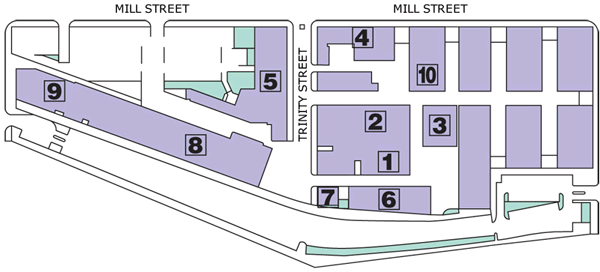
Plan of Distillery District

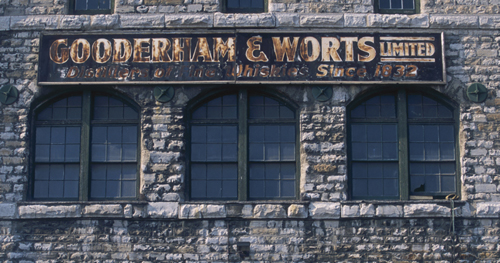
Gooderham & Worts sign
Brick Street Bakery
offers excellent 100-percent-organic breads, meat pies, sandwiches, and
desserts for takeaway or to enjoy on its picnic tables. |
|
Stop at the Visitor Centre, in The Stables ( Trinity St at Tank House Lane ), for a map and events information.
|
|
Join a guided tour ($15), a
Segway tour ($39, $69), or rent a self-guided audio tour, available at
the Visitor Centre, to get the most out of your visit. Email info@distillerytours.ca or phone for details. |
|
The district hosts many events, such as jazz and dance festivals (May & Aug) and outdoor art exhibits. |
|
Top contemporary Canadian artwork is featured in many of the galleries in the Pure Spirits Building and the Stone Distillery |
|
Visit the farmers’ market held every Sunday during July and August on the Distillery District’s boardwalk |
|
Top 10 Sights
Cannery
Vibrant
theater, opera, and dance companies have set up their headquarters in
this building where industrial-grade alcohol was once canned. Perigee
restaurant on the second floor serves up an excellent tasting menu from
its open kitchen.
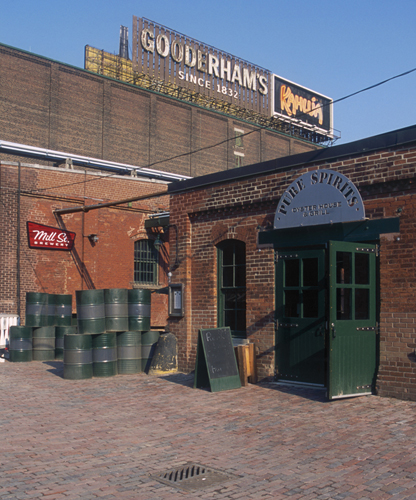
Pure Spirits Building
Fronted
with enormous windows to let in natural light – designed to diminish
the fire hazard of producing alcohol under gas lighting – this 1873
building is the perfect setting for the several art and photography
galleries within.

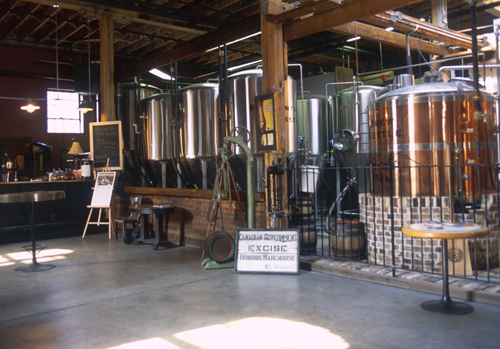
Paint Shop
While
many of the Distillery buildings still smell faintly of the grain and
alcohol once stored within, this 1879 building renews its scent of malt
and hops daily, as the Mill Street Brewery. Traditional handcrafted
beers include an organic lager and a robust coffee porter. While sipping
samples at the bar, check out the display of vintage distilling
equipment.

Boiler House Complex
In
the 1860s, the boiler house heated the entire distillery. Other
buildings in the complex housed a carpentry shop, a blacksmith, and a
canteen. They have now been converted into two restaurants, including
1832 Pizza and Pasta Bar, with patio seating in summer, and Brick Street
Bakery.
Cooperage
Wooden
barrels for aging whisky were manufactured here; stenciled instructions
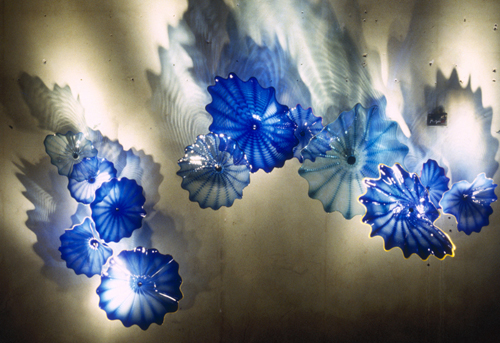
to workers are still on the walls. Today, the Sandra Ainsley Gallery,
exhibits glass art, including lavish sculpture by American Dale Chihuly.

Case Goods Warehouse
The
majority of arts organizations and artists in the Distillery complex
have their offices, workshops, and studios in this building where
cartons of liquor were once stored. Many artisans display their unique
works, including embroidery, jewelry, and handwoven clothing, in the
boutiques here.

Pump House
The
pumps in this redbrick building led from the underground water
reservoir, in case of fire; others were used for alcohol flow. It’s now
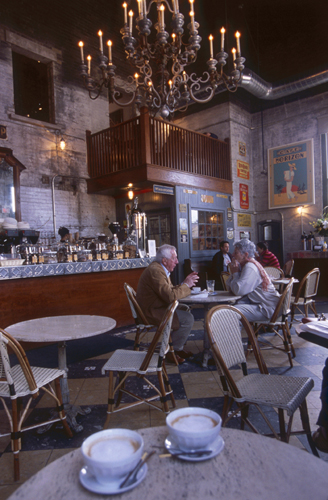
home to the delightful Balzac’s café. Beans are roasted Mondays and
Fridays.

Stone Distillery
This
massive limestone structure is the complex’s oldest. Its exterior
retains features, such as a winch, from the days when the shoreline –
and ships – came right up to the building. Inside are excellent art
galleries.
Molasses Storage
Upscale
contemporary furniture and home accessory shops, among others, occupy
the complex where a huge tank used to store molasses for rum once stood.
Denaturing Room
Machines
used by the distillery for alcohol production are dotted throughout the
building, as are craft boutiques and specialty food shops.