War of 1812
The
United States declared war on Britain in 1812, seeking freedom of
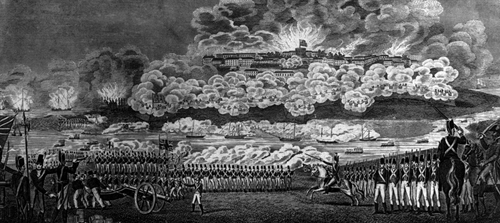
marine trade and the security of US seamen. In 1814 British troops
entered the capital and burned government buildings, including the White
House and the Capitol. If it had not rained, the whole city might have
burned.

The British burn Washington, 1814
Expansion
Thomas
Jefferson began western expansion by organizing the Lewis and Clark
expedition in 1803. The C&O Canal and the Baltimore and Ohio
Railroad provided commerce through the mountains and a period of
prosperity. New states were added to the Union, and bitter divisions
arose connected to the issue of slavery.Civil War
Conflict
between the Union and the seceding southern states began on April 12,
1861, and plunged Washington and the nation into crisis. Union
supporters, joined by thousands of blacks escaping slavery in the South,
doubled the city’s population in four years. Although threatened, the
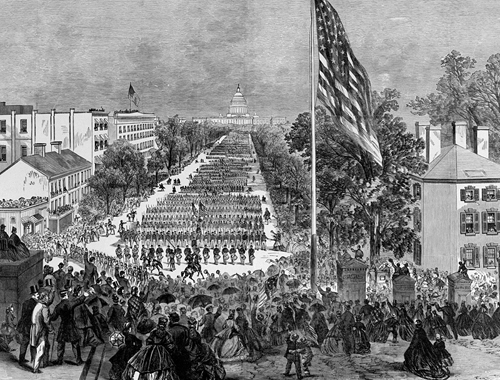
city was never taken by Confederate troops, and when the war ended in
1865, Washington was unharmed.

Civil War victory parade
New Deal
The
Roosevelt era (1933– 1945) brought tremendous growth to the city.
Efforts to bring the nation out of the Great Depression increased the
size and number of government agencies, and provided direct funds for
construction. Most of the buildings in the Federal Triangle, the
completion of the Supreme Court, and the National Gallery of Art were
New Deal works.On
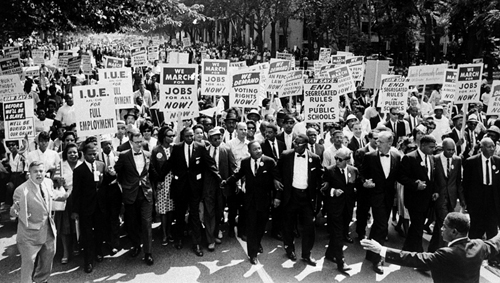
August 28, 1963, African-American leaders led 250,000 people to rally
in front of the Lincoln Memorial in support of equal rights. Dr. Martin
Luther King, Jr.’s eloquence in expressing his dream for America, along
with the size of the march, gave strong impetus to the struggle for
justice for all races.

March on Washington