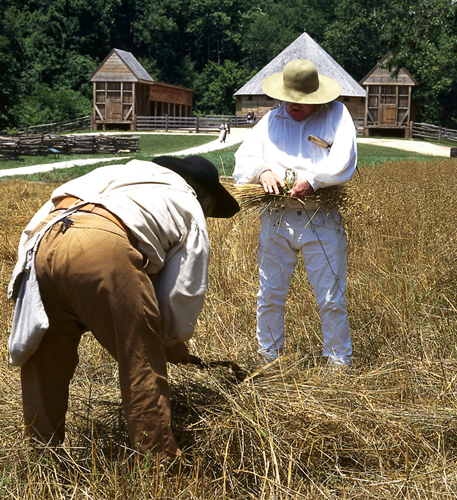
Features of Mr. Washington’s Farm
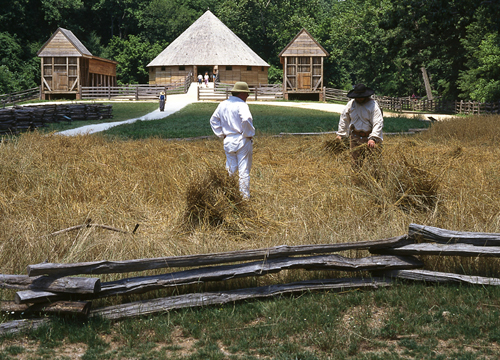
16-Sided Treading Barn
With
this unique design, George Washington created one of the most
aesthetically pleasing and yet efficient working barns. The circular
floorplan of the building with its slatted upper floor allowed horses to
tread over grain placed on the floor to break the heads from the
stalks. The grain then fell through the slats into temporary storage
below. The building seen today is a painstaking reconstruction of the
original based on thorough research by numerous archeologists and
curators.

16-Sided Treading Barn
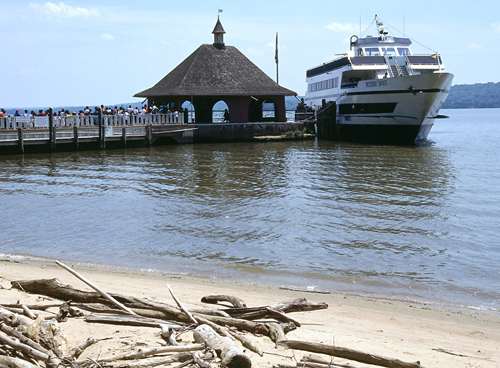
Shipping and Receiving Dock
The
wharf of the plantation was the main transportation center for shipping
outbound produce and receiving farming and household supplies. The
Potomac River was a major carrier of passengers and trade goods in
Washington’s day. At this evocative spot on its banks, it is easy to
imagine the bustle and excitement of early commerce on the river.

Shipping and Receiving Dock
River Tours
Visitors
can still use the Potomac River to reach Mount Vernon. Two tour boat
lines serve the wharf from the city: Spirit Cruise Line and Old Town
Alexandria. Spirit Cruise Line also offers lovely summer river
sightseeing tours originating and ending at Mount Vernon’s wharf.Spirit Cruise Line
202 554 8000
Potomac Riverboat Company
Old Town Alexandria
703 684 0580
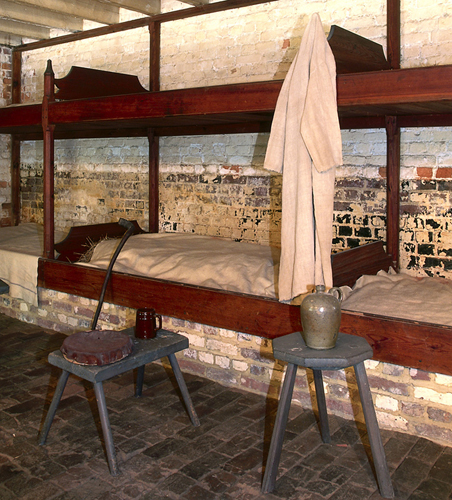
Slave Quarters
Many
slaves had living spaces distributed over the plantation so that they
were convenient to the work they were assigned. The remaining slaves
lived communally in these quarters on the edge of the estate. In his
will, Washington freed all his slaves and made provision for their
ongoing support. Memorials to his slaves, erected in 1983, are located
at the slave burial ground southwest of Washington’s tomb, which itself
is at the southwest end of the plantation.

Slave Quarters
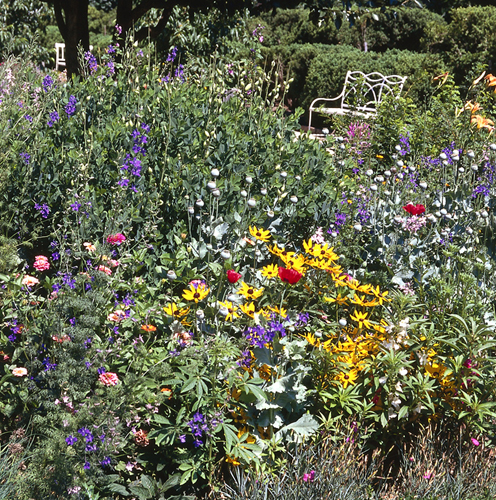
The
wonderfully colorful upper flower garden is densely planted with
varieties known to be cultivated in Washington’s time. The lower garden
is surrounded by boxwood bushes that were planted before Washington’s
death. This orderly and expansive plot yielded a wealth of vegetables
and berries for the plantation.

Upper Garden
Crop Experimentation
The
extremely handsome greenhouse complex was one place where Washington
carried out his extensive experimentation with different plant
varieties. He always sought to find potentially profitable new crops for
his five farms. Slaves were assigned to tend the wood fires to keep the
greenhouse warm in the winter.Livestock
Younger
visitors to Mount Vernon love the chance to come face to face with some
of the animals typical of colonial farming. Pearl, a Percheron draft
horse; Blue, the mule; Penelope, the Ossabaw Island hog; Nellie, the
Belgian draft horse; Flopsie, the Hog Island sheep; and Cochise the
pinto pony bring alive the animal-oriented culture of 18th-century
agriculture.Crop Rotation and Soil Conservation
The
president was possibly the first farmer to successfully combat the
depletion of farming soils. He drew up a chart of his fields and devised
planting schedules that would give each field time to be replenished
before new crop production began again. He also pioneered the use of
organic matter, such as dung and even fish heads, to improve the soil’s
fertility.Gristmill and Distillery
Located
3 miles (5 km) from Mount Vernon on Route 235, South is Washington’s
18th-century water mill, which played an important part in his vision
for America as a “granary to the world.” Colonial millers grind wheat
into flour and corn into meal just as it was done more than 200 years
ago. Archaeologists excavated the site of Washington’s 1797 whiskey
distillery. A fully reconstructed distillery provides demonstrations and
hands- on activities.Gristmill and Distillery
Open Apr–Oct:10am–5pm daily
Adm