Washington, D.C.’s Top 10 : Places of African-American History

  1. Lincoln Memorial

    This
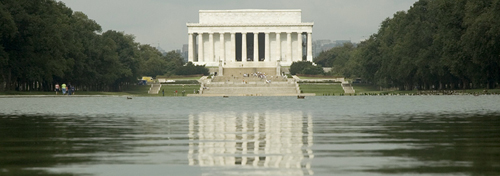
    memorial touches the hearts of all African-Americans because of
    Lincoln’s steadfastness in ending slavery in the US. It was here that
    Martin Luther King, Jr. made his “I Have a Dream” speech .


    Lincoln Memorial

  2. Metropolitan African Methodist Episcopal Church

    This
    church was important in sheltering runaway slaves before the Civil War,
    and its pulpit has hosted many respected speakers, including Frederick
    Douglass, Martin Luther King, Jr., and Jesse Jackson.

    • 1518 M St, NW

  3. Anacostia Museum and Center for African-American History and Culture

    This
    museum explores the role that African-Americans have played in the
    culture of the nation. Temporary exhibitions examine specific events or
    survey the work of important black artists.

    • 1901 Fort Place, SE

    • Open 10am–5pm daily

    • Dis. access

    • Free

  4. Cedar Hill

    Frederick
    Douglass, a former slave, made many speeches for the rights of
    African-Americans, and was an adviser to Abraham Lincoln. He and his
    wife, Anna, moved into this Gothic-Italian-style house in 1877. In the
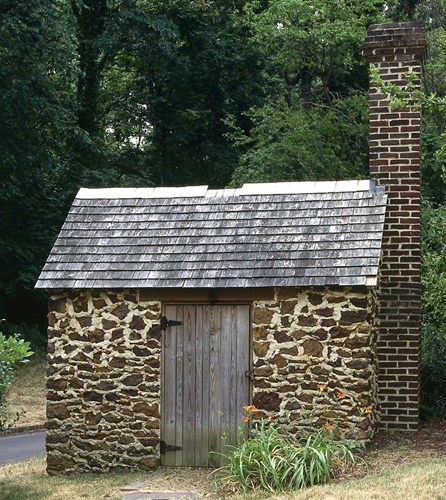
    garden is a humble stone hut nicknamed “The Growlery,” which Douglass
    used as a study .


    “The Growlery,” Cedar Hill

  5. Mary McLeod Bethune Council House

    A
    former cotton-picker, Bethune rose to be a leading educator of
    African-Americans and an activist for equal rights. Her house was the
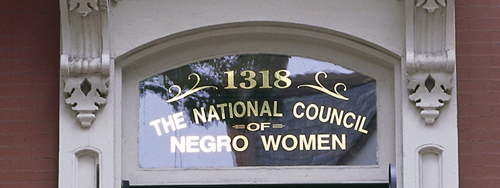
    headquarters of the National Council of Negro Women, which she founded.
    During the Franklin D. Roosevelt administration, she was a valued
    adviser .


    Mary McLeod Bethune Council House

  6. Supreme Court

    In
    one of its most notable decisions, the Supreme Court aided
    African-Americans’ quest for equality in the 1954 Brown v. Board of
    Education trial, in which the “separate but equal” system of education
    was overturned. It was a turnaround from the 1896 Plessy v. Ferguson
    decision that supported segregation .


    Supreme Court

  7. Mount Zion United Methodist Church

    Believed
    to be the first black congregation in the District, founded in 1816,
    Mount Zion’s original building was an important stop on the Underground
    Railroad. Its present red-brick site was built in 1884. Behind the
    church is a small cottage containing a collection of artifacts
    reflecting the black history of Georgetown.

    • 1334 29th St

    • 202 234 0148

    • Open by appt

  8. Lincoln Park

    This
    pleasant urban park does justice to its dedication to Abraham Lincoln.
    The 1974 Robert Berks statue of Mary McLeod Bethune shows the great
    educator passing the tools of culture on to younger generations. The
    Emancipation Statue by Thomas Ball (1876) shows Lincoln holding his
    Proclamation in the presence of a slave escaping his chains .
  9. Frederick Douglass Museum

    Another
    site associated with the statesman and abolitionist, this was
    Douglass’s home for nearly 10 years from the mid-1870s. Artifacts
    associated with Douglass are displayed here.

  10. Benjamin Banneker Park

    This waterfront park is named in honor of a renowned 18th-century free black mathematician and astronomer.

    • 10th and G Sts, SE


Top 10 African-American Figures

  1. Ralph Bunche

    The first African-American to receive the Nobel Peace Prize, because of his diplomatic efforts in the UN.

  2. Duke Ellington

    The musical genius was a native Washingtonian. He played his first paid performance on U Street.

  3. Hiram Rhodes Revel

    The first African-American to take a seat as US senator, representing Mississippi.

  4. Paul Lawrence Dunbar

    Dunbar
    rose from poverty to gain recognition as a poet – the first
    African-American to do so – publishing his first collection in 1892.

  5. Harriet Tubman

    The best-known figure who freed slaves through the Underground Railroad.

  6. Ida B. Wells-Barnett

    This celebrated crusader against anti-black government actions also marched in the 1913 women’s suffrage rally.

  7. Marian Anderson

    In
    1939 the singer was barred from Constitution Hall because of her race,
    so gave her Easter Sunday concert at the Lincoln Memorial instead.

  8. Eleanor Holmes Norton

    Norton has been effective as the District’s non-voting House member, lobbying to promote Washington issues.

  9. Walter E. Washington

    Mayor of Washington from 1974–8, the first elected mayor in the city for over 100 years.

  10. Anthony Williams

    Elected mayor in 1998, he has streamlined administrative and fiscal operations.