By the end of nine months, your baby will be a
sociable, lively member of the family. You’ll notice a dramatic change
in her development as her coordination improves, and her little brain
sets to work making sense of the world around her.
By nine months, your baby should:
See small objects easily, and pick them up
Move a toy easily from hand to hand, and sit and play with toys
Sit by herself without pillows or other support
Enjoy standing when you hold her up, and begin to pull herself up to stand at the furniture
Practice rolling from her stomach to her back, and back again
Begin to crawl on her hands and knees (some babies never crawl, but develop an efficient bottom-shuffle instead)
Move from lying down to sitting up
Babble and make “b” sounds
Enjoy blowing bubbles
Explore everything with her mouth
Show signs of picking up on your emotions, perhaps smiling when you are happy, or frowning or looking worried when you sound or look angry
Show the first signs of nervousness around strangers or separation anxiety
She’s now ready for …
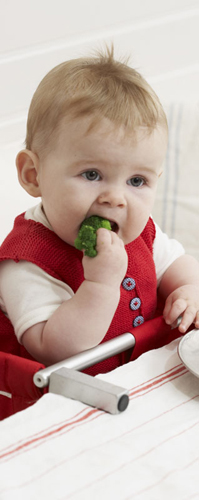
Solid food,
and in increasing amounts—by nine months she should be eating three
meals a day, and beginning to show less interest in her milk feedingsA firm bedtime routine, which she will now remember and anticipate
Favorite books and bedtime stories, which she will also remember and look forward to
A sturdy push car or wagon, which she can use to support herself as she pulls up to begin the process of learning to walk
Saying her first word—she
may make a sound such as “ba” that she uses, with meaning, for many
different things, followed shortly afterward by real words mixed in with
the babble