One of the largest areas of contention in any home is
the tricky matter of chores. When children are added into the mix, a
simple discussion about who could do what can easily descend into an
argument about what is fair, who does the most, and whose fault it is
that you have a messy toddler.
You know the scenario. It has
been a long, hard week. You’ve barely had time to speak to each other
each evening before collapsing into bed with exhaustion, and now it is
the weekend. There is the weekly shopping to do, a mound of ironing,
endless dishes, and tidying—and the carpet hasn’t seen a vacuum cleaner
for a while. Household chores don’t complete themselves; they steal time
when you would much rather be doing something else. With small children
in the mix, running a household can seem like a never-ending challenge,
and the tension starts to build: “You never do anything.”/“You never
ask me.”/“I have to do everything.”/“But you’re never here.”/“Look at
this mess. Your children are out of control.”/“What do you mean, ‘my
children’?!” and so it goes… What both voices are saying is: “I don’t
feel appreciated enough and I’d much rather be doing something else—and
to top it all, you never listen to me.”
How you can help each other
Your time together is precious so try not to “sweat the small stuff.”
Most of the tasks can be tackled with the minimum of fuss:
Make a pact
that you will tell each other clearly when you would like help. Both
sexes can develop a martyred air when they feel life is
unfair—especially when one partner has done more of their fair share of
the diaper changing lately. You need to explain how you feel and what
you need help with.Agree
to disagree and find a compromise. If one of you likes the house
pristine and the other can live with the mess, find mutual ground. For
example, cleanliness takes priority over tidying.Agree to sharing the children, so you each have child-free time to complete a few things without interruption.
Restrict
the number of toys or rooms that your child can play in so that the
chaos is contained to some extent (although not to the extent that he or
she is constrained or restricted too much).Swap roles occasionally so you can empathize with each other’s needs.
Spend
time with parents of children of a similar age, who can help to
normalize your concerns, and remind you that you are not alone!Appreciate
and thank each other—as often as possible. Children are a joy, but they
are exhausting, too. It is a treat to have a home that feels like yours
for a few hours before it descends back into a toddler zone.
Dear Tanya
5 points to remember
Emotional intelligence
Your toddler will have to learn to handle some big and
all-consuming feelings. He needs you to help him feel secure at these
times and manage his emotions as he grows and learns.

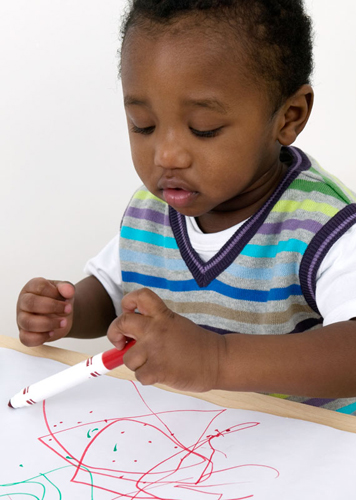
Let him scribble
There is no need for formal lessons or anything too structured at
this age. Overcontrolled playtime will inhibit rather than encourage
your child’s development.